Home / Wood processing
Processes
How Vietnamese Wood Factories Process Timber
Eight steps sit between a sawn board and a carton on a container. Each one has a number you can specify and a way it goes wrong. Knowing which steps a factory runs itself is half of choosing the right one.
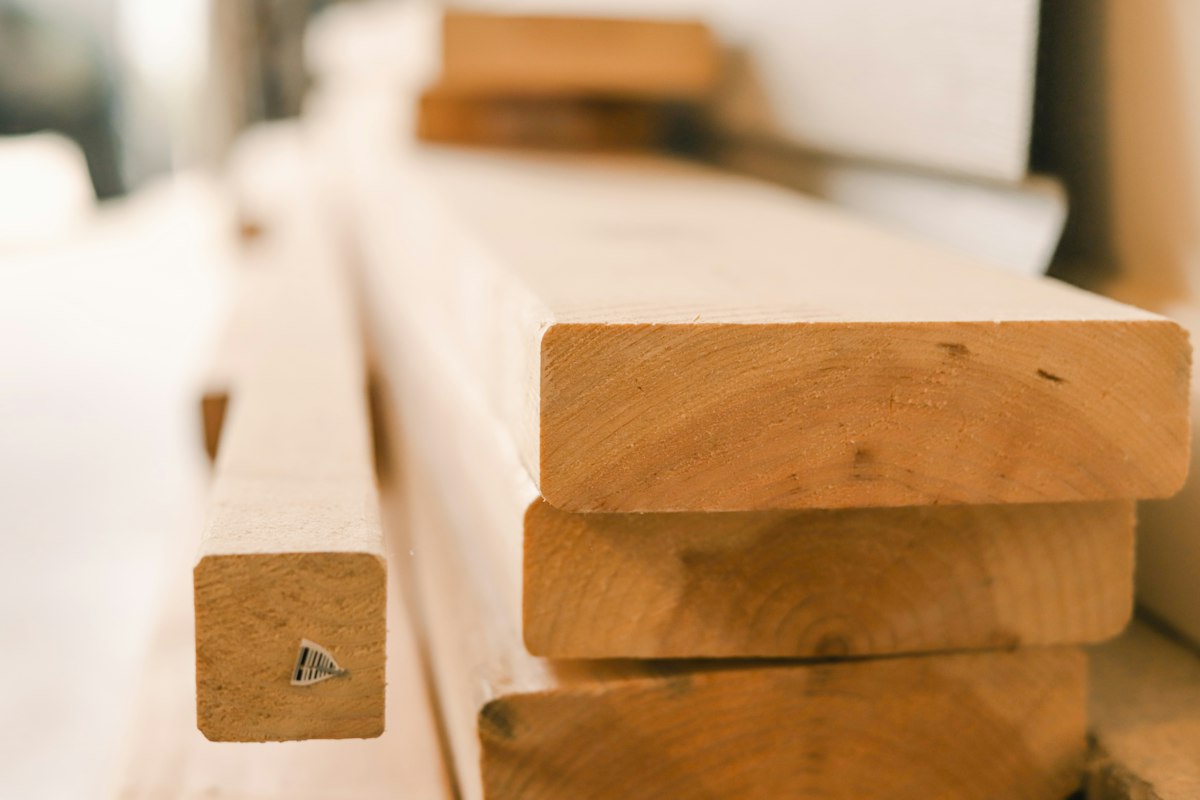
The process chain, from board to carton
Most export furniture, components and kitchenware made in Vietnam pass through these steps in this order. A factory that skips or subcontracts one of them is not necessarily worse, but you should know which.
Sawing and grading
Logs or cants are broken down on a band saw or a multi rip saw, then graded for knots, pith, stain and wane before any money is spent drying them.
Kiln drying
Boards are stacked on stickers and dried to a target moisture content on a schedule set by species and thickness, then conditioned to even out the core and the shell.
Cross cutting and finger jointing
Defects are cut out. Short clear pieces get a finger profile on both ends and are glued under end pressure into long strips.
Edge gluing and pressing
Strips are glued side by side in a clamp carrier, frame press or radio frequency press, then planed or wide belt sanded to thickness.
Machining and CNC routing
Moulders, tenoners, boring lines and CNC routers cut the profiles, joints and holes. 5-axis centres handle curved and compound shapes.
Sanding
Wide belt sanders for flat parts, profile and brush sanders for edges and shapes, hand sanding for what the machines cannot reach.
Finishing
Oil, stain plus lacquer, polyurethane, UV coating or paint, applied in a spray booth, on a flat line or by roller, with drying between coats.
Moisture and final QC
Moisture readings on incoming boards, before pressing and before packing, plus dimension, finish and assembly checks against the approved sample.
Typical values by process
These are typical ranges for plantation hardwood such as acacia and rubberwood in mid size export factories. They are not promises. The factory that quotes your product confirms the figure it can hold on your part.
| Process | Typical value | What to write in your specification |
|---|---|---|
| Kiln drying | 8 to 10 percent MC for indoor export furniture, 12 to 16 percent for outdoor | Target range by market, measurement method and where in the board it is read |
| Finger jointing | Finger length about 10 to 15 mm in furniture grade work | Whether joints may show on the visible face and the glue durability class |
| Edge gluing | Common panel thicknesses 18, 20, 25 and 30 mm | Thickness and tolerance, strip width, colour sorting rule |
| CNC routing | Around plus or minus 0.2 to 0.5 mm on machined features | Critical dimensions, datum edges, minimum inside radius, visible faces |
| Sanding | Typically 120 to 180 grit before stain or lacquer, finer between coats | Final grit for stain grade surfaces and whether the grain is filled |
| Finishing | Film thickness and gloss set by the coating system and the sample | Coating family, gloss level, colour reference, test standard for the market |
Machine positioning is far tighter than wood itself can hold. Solid wood moves with humidity, so a tolerance that ignores moisture content is a tolerance nobody can meet a month after delivery.
Kiln drying decides whether the rest works
Wood shrinks and swells as it gains or loses moisture, and it moves far more across the grain than along it. Every later step assumes the board was dried to the moisture content it will live at.
Factories in Vietnam dry in steam heated or conventional kilns, then condition the charge so the core and the shell end up close together. The common corner cut is a rushed schedule. A board can read dry on the surface and still be wet inside, which shows up later as cupped tops and open joints.
- Incoming checkMoisture readings on boards from the kiln, by batch, before they go to cross cutting.
- Before pressingStrips for finger jointing and edge gluing read again. Glue lines fail when pieces of different moisture are pressed together.
- Before packingA final reading on the finished product. Timber that sat in an open yard through a wet season climbs back up.
- MethodPin or pinless meters for routine checks, the oven dry method for disputes. The oven method is the reference in wood drying practice and in ASTM D4442.
Glue classes for finger jointing and edge gluing
Panels and laminated parts are only as good as the glue line. Durability classes D1 to D4 come from the European standard EN 204 and are the easiest way to say what you need.
| Adhesive | Typical use | What to know |
|---|---|---|
| PVAc, EN 204 class D2 | Dry interior parts such as drawer boxes and furniture carcasses | Cheapest and easiest to run. Not for kitchens, bathrooms or anything that sees water. |
| PVAc, EN 204 class D3 | Interior parts with occasional water or high humidity, kitchen fronts, table tops | The usual choice for export table tops and edge glued panels. |
| D4 class, EPI or PUR | Outdoor furniture, decking components, bathroom parts | Higher cost and stricter pressing conditions. Ask for the data sheet behind the class claim. |
| Urea or melamine based resins | Plywood, veneered panel and some laminating work | Formaldehyde based, so the panel needs CARB and TSCA Title VI documents for the US. |
Machining, sanding and finishing
This is where most visible defects start. A part can be dimensionally correct and still fail the sample because of tear out, burn marks, sanding scratches under a dark stain or uneven gloss.
- CNC routing3-axis routers and nesting tables for flat parts and panels, 5-axis centres for curved chair parts and compound angles. Cutter diameter limits the smallest inside radius, so a sharp inside corner needs a radius or hand work.
- Grain directionCutting against the grain tears fibres out of the surface. Tell the factory which faces are visible so the best edge goes where it shows.
- SandingScratches from a skipped grit stay invisible on raw wood and appear under stain. Ask for the grit sequence on stain grade parts.
- FinishingSpray booths handle shaped and assembled pieces, flat lines with roller or UV curing suit panels. The coating family sets the test standard for your market. See the species reference for how each wood takes a finish.
Design for the process, not against it
Small choices on the drawing move the price more than buyers expect. These four are the ones factories raise most often.
- Use standard thicknesses18, 20, 25 or 30 mm panels come off existing press and sander settings. Odd thicknesses add a planing step and waste.
- Allow finger joints where they hideBacks, rails and painted parts can use finger jointed stock at a lower price. Keep single piece stock for visible clear coated faces.
- Repeat the same partA CNC program, jig and fixture paid once can serve several models. See the product categories for typical MOQ by group.
- Name the finish by referenceA physical colour sample or a coating supplier code beats a word like walnut. Approve it on the real species.
How we use this when we match
The process list is part of the fit. A product with stain grade rubberwood panels needs a factory that edge glues and sorts colour well. A curved outdoor chair needs 5-axis work and a D4 glue line. We read your specification and match up to 3 factories that already make that kind of product, and reply within 24 business hours.
We are a matching service, not a factory. The factory that quotes you owns the kilns, presses and finishing line, and you confirm its process and test results on the sample.
- Name the speciesBotanical name, grade and colour rule. The species reference lists what Vietnamese factories work with.
- Name the constructionSolid one piece, finger joint, edge glued panel or veneered panel. Quotes do not compare without it.
- Name the moisture targetA range by market, with the check points and the method.
- Name the finishCoating family, gloss and a physical colour reference.
Questions about wood processing
Which wood processes do most Vietnamese factories run in house?
Mid size furniture factories usually run kiln drying, finger jointing, edge gluing, machining, sanding and finishing under one roof. Sawmilling, veneer pressing, metal parts and upholstery are more often bought in or subcontracted. Say on the RFQ which steps matter to you and we match factories that run them.
What moisture content should I specify?
For indoor furniture going to the US or northern Europe, 8 to 10 percent at production is the usual target. Outdoor furniture is normally 12 to 16 percent because it equalises with outside air anyway. Write the range, the measurement method and the check points into the specification.
Is finger jointed wood weaker than solid wood?
A well made finger joint with the right glue class is strong enough for table tops, cabinet sides and most furniture components. It is a weaker choice for slender parts under high bending load, such as chair legs and arms, where a single piece or a laminated blank with continuous grain is safer.
Does the finishing process change the price much?
Yes. Raw is cheapest. Each extra coat, a stain matched to a reference, a high gloss level or a water based system adds sanding, drying time and rejected pieces. The coating also decides which test standard the finish has to pass for your market.
Guides on each step
- Materials
Wood Moisture Content for Export Furniture Explained
Why moisture content decides whether furniture cracks after it lands, what to specify for each destination market and how to check the factory reading.
- Choosing a Factory
CNC Wood Machining Vietnam: 3-Axis, 5-Axis, Nesting
What CNC routers, nesting machines and 5-axis centres do in Vietnamese furniture plants, which parts suit each, and what to ask about tooling and tolerances.
- Materials
Wood Finishes for Export Furniture: Oil, Lacquer, UV
Oil, wax, PU lacquer, UV coating and paint compared on durability, cost, lead time and repairability, plus how to write a finish spec a factory can hit.
- Choosing a Factory
Furniture Quality Inspection and Container Loading
The inspection points that matter on a wood furniture order, what an AQL sample really covers and why loading supervision catches damage a report will not.
Know which steps your product needs?
Send the product, species, construction, finish and moisture target. We match it with factories that run those steps and reply within 24 business hours.