Guides / Choosing a Factory
In-Process QC in a Vietnamese Furniture Factory: Incoming, Line and Final Checks
November 21, 2026
A final inspection finds defects. In-process quality control is what stops them being made. For an importer, the difference decides whether a rejected container is a one-off or a habit.
This guide explains how a well run Vietnamese furniture factory organises its own checks, shows a QC point table you can compare against a factory visit and lists the records worth asking for. It is written for buyers who rely on one pre-shipment inspection and have never judged what happens before it.
Final inspection catches defects, the factory’s QC prevents them
A third party inspector arrives at around 80 percent packed, pulls a sample and reports. That report is a snapshot of one lot. The inspection and loading guide covers what to put in it and how AQL sampling works, so this page does not repeat that.
What the snapshot cannot show is the system behind the lot. Did the factory check the lumber moisture when it arrived, or only at the end? Does the finishing line compare each batch with the approved colour? When a worker sands through a veneer, does the piece get tallied, fixed and traced to a cause, or quietly replaced?
A factory that checks along the line has three things a factory that checks only at the end does not: earlier correction, defect data by stage and fewer surprises at 80 percent packed. When you vet a factory, ask to see this system. The vetting guide covers the wider checklist. This page goes deep on one part of it.
Incoming checks: lumber moisture, panel class, hardware, finish materials
Everything downstream inherits the quality of what comes through the gate.
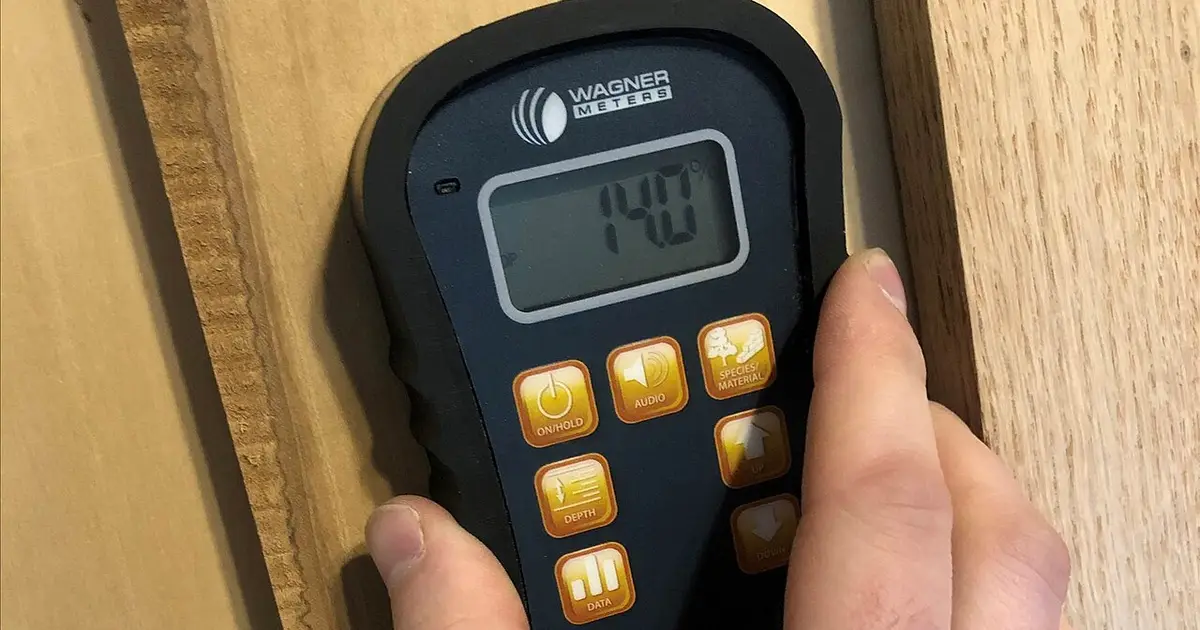
Lumber. Species, grade and moisture content, checked on arrival and again after drying and storage. The moisture content guide covers targets. For QC the point is who measures, with which meter and where the reading is written down.
Panels and veneer. Panel type and grade against the specification, thickness, flatness and face quality. For a veneered casegoods order, also the veneer sheets: species, colour range within a lot and the number of sheets set aside to keep a consistent look across a set.
Hardware. Correct type, material and count against the bill of materials, with a sample cycled for drawer runners and hinges. Hardware errors are cheap to catch at the door and expensive to catch in a sealed carton.
Finish materials. Batch or lot number recorded for stain, sealer and topcoat, so that a colour problem can be traced to a batch.
ISO 9001:2015 sets the frame for these checks in clause 7.1.5, titled monitoring and measuring resources. In plain terms: where a measurement is used to decide whether a product conforms, the equipment must be suitable, maintained and, where traceability matters, calibrated or verified at intervals, with the record kept. For a furniture factory this is the moisture meter, the callipers and the gauges. A meter with no calibration or verification record makes every reading on the check sheet harder to trust.
In-line checks at machining, sanding and the finishing line
This is where most prevention happens, and where the difference between factories is greatest.
Machining. A first-piece check after each setup, then periodic checks against the drawing. Parts are measured, not just looked at. A jig or template that has worn shows up here before a hundred parts are cut.
Veneer pressing and edge banding. Bond line, bubbles, telegraphing of the substrate and edge banding lift. These are checked as a batch leaves the press, since a failed batch discovered after finishing is a total loss.
Sanding. Sanding grit sequence, flatness and, on veneered parts, whether anyone has sanded through the face veneer. Thin face veneer leaves little margin, and a sand-through is visible only after the colour coat goes on. A good line has a sand-through check at the end of sanding with the part under side light.
Assembly. Squareness, gaps, joint fit, hardware position and function. Drawers and doors are cycled, not just fitted.
Finishing line. Colour against the approved sample and limit samples, sheen, film coverage on edges and undersides, dust and contamination. Colour drifts when a stain batch changes, when spray settings change, when humidity moves or when a different operator takes over the booth. A factory with QC at the line catches the drift in the first pieces of the shift. A factory without it finds out at final inspection with a whole lot out of tolerance.
QC point table: solid wood and veneer casegoods
Use this as a comparison when you visit or review a factory’s documents. The frequencies are examples to agree on, not an industry standard.
| Stage | What is checked | How | Example frequency | Record name |
|---|---|---|---|---|
| Lumber receiving | Species, grade, moisture content | Visual check, calibrated moisture meter | Every delivery, sample per stack | Incoming lumber log |
| Panel and veneer receiving | Type, thickness, flatness, face and colour range | Gauge, visual against sample | Every lot | Incoming panel sheet |
| Hardware receiving | Type, material, count, function sample | Count against bill of materials, cycle test | Every lot | Hardware check sheet |
| After kiln and storage | Moisture content before machining | Meter, readings on several boards | Every charge | Kiln and storage log |
| Machining | Part dimensions, joint geometry | Callipers, gauges, template | First piece per setup, then periodic | Machining check sheet |
| Pressing and edge banding | Bond line, bubbles, edge lift | Visual, tap test | Every batch | Pressing log |
| Sanding | Surface flatness, sand-through | Hand and side light | Every part or a set sample | Sanding check sheet |
| Assembly | Squareness, gaps, function | Square, feeler gauge, cycle test | Every unit or a set sample | Assembly check sheet |
| Finishing | Colour, sheen, coverage, dust | Against approved and limit samples | First pieces per shift and per batch | Finish line sheet |
| Final QC | All of the above, packing | Full check on set sample | Every lot before cartons close | Final QC report |
Defects caught in line
Two illustrative examples, not taken from a named factory, show why the table is worth having.
Sanding through veneer. A worker finishes a drawer front and a corner of the face veneer is gone. At the sanding check it is spotted under side light. The part is scrapped or patched, the tally for the sanding stage goes up by one and the supervisor sees at the end of the week that the same station caused most of the sand-throughs. A fixed station and a new sanding sequence follow. Without the check, the same part goes to finishing, takes colour as a pale patch and is found at final inspection among the rest of the lot.
Colour drift on the finishing line. A new drum of stain is opened mid-shift. The first piece after the change is held against the approved sample and the limit samples. It is slightly red. The line stops, the batch number is recorded and the mix is corrected before another piece is sprayed. Without the check, the shift finishes a lot in the wrong tone, and the pieces cannot be reworked cheaply because the colour is now under a topcoat.
Need a quote for this product? Get matched with a Vietnam wood factory
Final QC before cartons are sealed
The factory’s final check is not the same as your inspector’s and it should not be. It is the factory’s last chance to stop a defect leaving the building, run by people who know the product and the history of the lot.
In ISO 9001:2015, clause 8.6 (release of products and services) says release to the customer should not proceed until the planned checks are completed, and that the factory keeps evidence of conformity and of who authorised the release. Clause 8.7 (control of nonconforming outputs) says a nonconforming output must be identified and controlled so it is not used or delivered by mistake, with the action taken recorded. A factory working this way can show you who signed off a lot and what happened to the pieces that failed. A factory that cannot is making release decisions without a trail.
If a factory samples at final QC, the sampling plan family most buyers know is ISO 2859-1. ISO describes it, in the edition approved in January 2026, as an acceptance sampling system of single, double and multiple plans for inspection by attributes, indexed by acceptance quality limit and intended for lot-by-lot inspection. Agree the plan and levels in the contract, as the inspection guide says, so both sides use the same rules.
Note on clause numbers: they are from the 2015 edition. A revised ISO 9001:2026 was published on 16 September 2026 with a transition period, and some clauses were restructured. Check the numbers against whichever edition your factory works to.
Records that show the system works
Ask for these. A blank form proves nothing. A filled form from last month proves a lot.
- Check sheets with date, job number, quantity checked, result and initials.
- A defect tally by stage, even a hand-drawn bar chart on a board by the line. This shows where the process fails and whether anyone looks.
- A rework and reject log: what failed, the action and the person who decided it.
- Calibration or verification records for the moisture meter and measuring tools.
- Approved sample and limit samples, signed, dated and kept where the line can reach them.
- Corrective action notes for repeated defects: what was changed so it does not happen again.
On finish tests: if your buyer specifications include a test report, know what it tests. EN 12720 is a method for assessing the resistance of rigid furniture surfaces to cold liquids. It leaves the liquids and exposure times to be stated in the requirement specification or agreed between purchaser and supplier. ASTM D3359 is a tape adhesion method that ASTM describes as written for coatings on metal substrates. If you need coating adhesion on wood, ask your lab which method it applies and put it in the specification. A test named in the order is useful. A test assumed is not.
Questions to ask on a factory visit
Walk the line against the table above. These questions turn the walk into evidence:
- Where do you measure moisture on arrival, and who owns the meter?
- Show me the check sheet from the last lot of a product like mine.
- What was the most common defect last month and what changed because of it?
- Where is the approved colour sample for the job on the line today?
- Who can stop the finishing line, and has anyone done so this month?
- What happens to a piece that fails? Show me the reject area and the log.
- Who signs off a lot before the cartons are sealed?
The answers matter less than the speed and specifics. A supervisor who opens a folder and shows a sheet knows the system. One who says “our QC is strict” has told you what the system is not.
To compare factories on these terms, include QC questions in your request. The RFQ page matches your specification with up to three Vietnamese wood factories and replies within 24 business hours, so you can put the same questions to each.
Sources
- ISO 9001:2015 text as published by EAPO (clauses 7.1.5, 8.6 and 8.7 checked in the document). A copy of the standard. The authoritative version is sold by ISO.
- DNV: ISO 9001:2026 revision (publication 16 September 2026, three year transition, partial restructure)
- ISO 2859-1:2026 listing (scope, approval date 22 January 2026). A national standards store page. Check iso.org for the current edition.
- EN 12720:2009+A1:2013 (SIS summary of scope)
- ASTM D3359 scope (store.astm.org). An older edition page, used for the scope statement only.
- Photo: Hrco, CC BY-SA 4.0, via Wikimedia Commons.
Frequently asked questions
What is in-process QC in a furniture factory?
It is the set of checks the factory runs while the furniture is being made: incoming material checks, checks at machining, sanding, assembly and finishing, and a final check before cartons are sealed. The aim is to stop a defect at the stage where it is cheapest to fix, rather than find it in a finished container.
Is a final inspection enough?
A final inspection tells you how many defective pieces exist. It cannot tell you why they exist or whether the next order will repeat them. A factory with checks along the line has defect records by stage, and those records show where the process drifts.
What records should a furniture factory show me?
Incoming moisture and grade records, line check sheets with dates and initials, a defect tally by stage, a rework and reject log and the calibration record of the moisture meter. Ask for last month's records for a product similar to yours, not a blank form.
Does ISO 9001 certification mean the factory's QC is good?
No. It means a certification body found a documented management system working at the audited address and scope. It does not rate your product. Judge QC by the records on the floor and a sample round, and treat a certificate as one input.
Need a quote for this product?
Send the specification. We match you with up to 3 Vietnamese wood factories and reply within 24 business hours.
Get matched with a Vietnam wood factory