Guides / Choosing a Factory
Furniture Damage and Defect Claims on a Vietnam Order: Who Pays and How to File
November 21, 2026
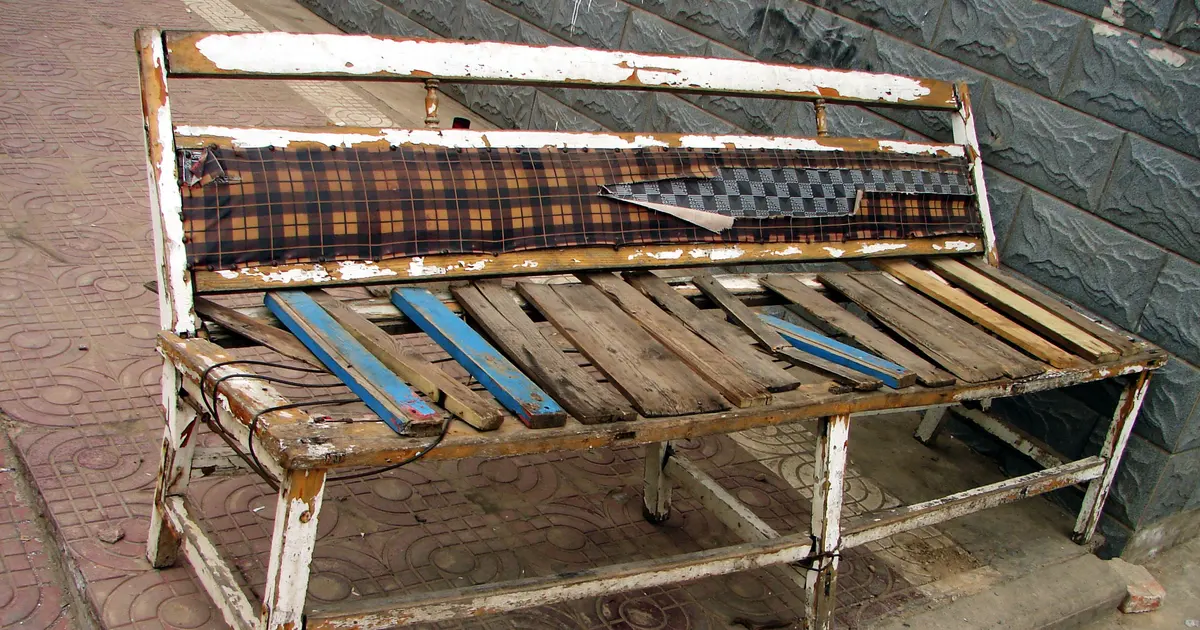
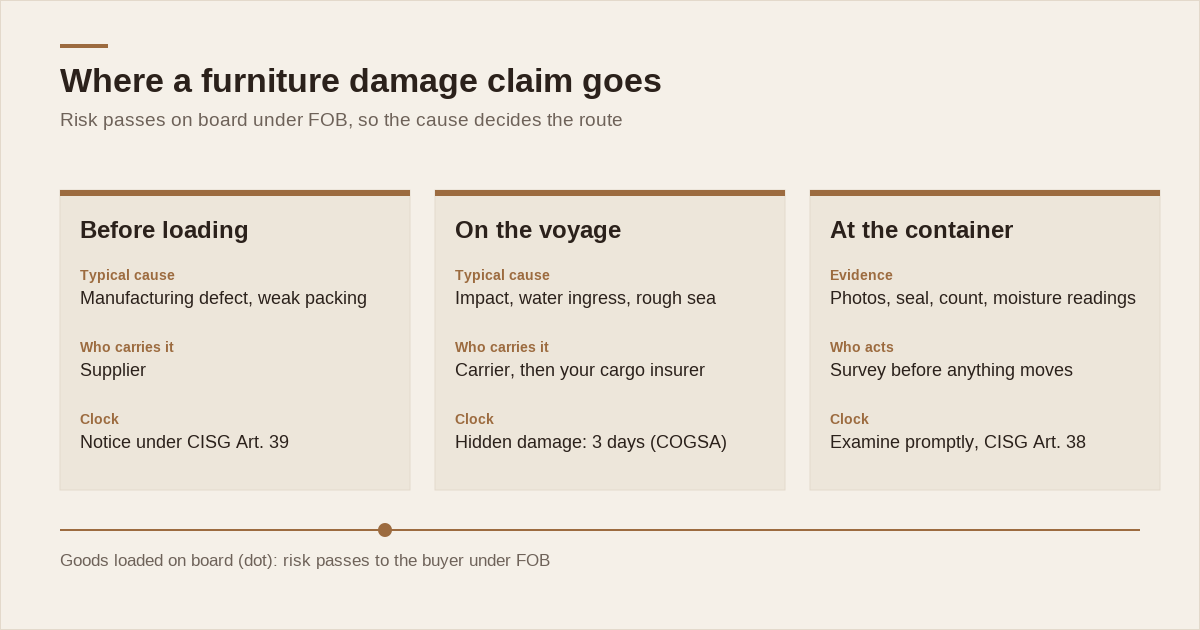
Who pays when furniture from Vietnam arrives damaged or defective depends on two things: what caused the damage and when it happened. Damage that occurred after the goods were loaded on the ship is normally a claim against the carrier or your cargo insurer. A defect that was already in the goods or the packing when they were loaded is the supplier’s responsibility, even if nobody saw it until the container was opened.
This guide separates the causes, shows which clocks start when the container arrives, lists the evidence to collect before anything is moved and gives the order of steps for filing. It is general information, not legal advice. Contract terms, the bill of lading and your policy decide your case.
Step 1: sort the damage into four causes
Before you write to anyone, decide which of these you have. Many claims fail because they are filed against the wrong party.
| Cause | What it looks like | Who normally carries it | First route |
|---|---|---|---|
| Transit damage | Crushed cartons, impact marks, water ingress, a damaged container | You, once the goods are on board under FOB | Carrier, then your cargo insurer |
| Packing failure | Corners crushed in a sound container, loose parts, no protection on faces | The supplier, if packing was inadequate at loading | Supplier, with insurer in parallel |
| Manufacturing defect | Failed joints, finish faults, wrong dimensions, wrong species | The supplier | Supplier |
| Moisture and mould | Cracks, warp, mould on arrival | Shared, depends on moisture at packing and condensation in transit | Supplier and insurer, see our mould guide |
Damage after delivery, such as misuse, storage in a damp warehouse or handling by your own staff, is yours.
A mixed case is common. Cartons crushed in transit can also show that the packing was too light. Document both and file in parallel.
Step 2: know where the risk passed
Most furniture orders from Vietnam are FOB. Under Incoterms 2020 FOB the seller delivers the goods loaded on board the vessel you nominate at the named port. The risk of loss or damage transfers to the buyer at that point, according to the ICC Academy. The buyer contracts the carrier and pays the freight.
Two practical points follow. First, the buyer arranges cargo insurance, because the buyer holds the risk on the water. Confirm your policy was in force before the goods left the factory. Second, risk passing does not make the seller liable for nothing. A defect that existed at loading is a different question from damage on the voyage.
The UN Convention on Contracts for the International Sale of Goods says the same thing in its own words. The seller is liable for any lack of conformity that exists when risk passes to the buyer, even if it becomes apparent only afterwards (Article 36). Goods must be of the quality and description the contract requires and be packaged in the usual manner or in a way that preserves and protects them (Article 35). The convention is in force for Vietnam since 1 January 2017 and for the United States since 1 January 1988, according to UNCITRAL. Parties can exclude it, so check your contract.
Step 3: watch the clocks
Several deadlines run from arrival. None is the same length, and the shortest can pass in days.
| Clock | Who sets it | What it says |
|---|---|---|
| Examination | Sales convention, Article 38 | Examine the goods, or have them examined, within as short a period as is practicable; where goods travel, examination may wait until they arrive |
| Notice of defect | Sales convention, Article 39 | Lose the right to rely on a defect if you do not give notice, specifying it, within a reasonable time after you found or should have found it, and in any case within two years of handover, unless a contractual guarantee period says otherwise |
| Notice to the carrier | Bill of lading terms and applicable law | Under the US Carriage of Goods by Sea Act, written notice is due when the goods are removed or, for damage not apparent, within three days of delivery; suit is barred after one year |
| Carrier liability limit | Same Act | $500 per package unless the nature and value were declared before shipment and put in the bill of lading |
| Insurer notice | Your policy | Not public in general; ask your broker before the container arrives |
The three-day rule and the $500 limit are the figures buyers miss. A container of furniture often has hundreds of cartons, so the per-package cap can be far below the real loss. This is why a cargo policy is a normal part of an FOB order. It is not a luxury.
The Act applies to carriage by sea under a US bill of lading. If your shipment is covered by different rules, ask the forwarder which ones apply.
Step 4: what an insurer will and will not pay for
A standard summary of the Institute Cargo Clauses (A), the widest of the three common clause sets, describes cover for physical loss or damage from external causes including mishandling and rough seas. The same summary lists exclusions that matter for furniture: inappropriate or defective packing or stowage by the shipper, and inherent vice or natural deterioration.
That means two claims can go the same way for different reasons. Damage caused by weak packing may be excluded by the insurer and recoverable from the supplier. Damage caused by a collision or a rough sea may be insured and not recoverable from the supplier. File with both and let each decide. The exact wording of your policy governs, so ask for it before you ship.
Step 5: collect evidence before anything moves
Evidence is what turns a complaint into a claim. Do this at the container, before unloading:
- Photograph the container doors, the seal and the seal number before opening.
- Photograph the cargo as it stands when the doors open. Show where damage sits.
- Do not discard, repair or move damaged pieces until a surveyor has seen them or the insurer says you can.
- Count cartons against the packing list and record every mismatch.
- Note damage on the delivery receipt in writing, with a photo of the note.
- For wood, take moisture readings on several pieces with the meter in the photo and note the date and location.
Then pull the documents that show what left the factory: the packing list, the bill of lading, the pre-shipment inspection report and the photos taken at loading. Our guide to furniture quality inspection and container loading explains why loading supervision is a separate check and why its photos decide a dispute.
A short report from an independent surveyor carries more weight than your own photos. For a large claim, book one on the day the container opens.
Need a quote for this product? Get matched with a Vietnam wood factory
Step 6: file in order
- Day of arrival. Document the container and the damage. Note it on the delivery receipt.
- Same day or next. Give written notice to the carrier and to your insurer. Do not wait for the full survey.
- Within days. Send the supplier a written notice that names the defect, shows the photos and states what you want: replacement, repair, a credit or a price reduction. Be specific about the defect. Article 39 asks for notice that specifies the nature of the lack of conformity.
- Survey. Agree who inspects and when. If the supplier wants its own inspector, give access before you change anything.
- Remedy. Settle in writing. Record what is repaired, what is replaced and what is credited.
- If no agreement. Use the dispute clause in the contract. Without one, take legal advice before you choose a forum.
Step 7: choose the remedy
The sales convention lists remedies that map to furniture. A buyer may require the seller to repair a lack of conformity unless that is unreasonable (Article 46(3)). Substitute goods may be demanded only if the lack of conformity is a fundamental breach (Article 46(2)), and the request has to come with the Article 39 notice or within a reasonable time after it. A buyer may also reduce the price in the same proportion as the value of the goods delivered bears to the value that conforming goods would have had at delivery (Article 50). That right falls away if the seller remedies the lack of conformity under the convention’s cure provisions, or if the buyer refuses to accept the cure.
A worked example, with invented numbers. An order is priced at USD 20,000. The goods delivered are worth, at delivery, 90 percent of what conforming goods would have been worth. The reduced price is 90 percent of USD 20,000, which is USD 18,000, so the reduction is USD 2,000. The calculation runs on value, not on the cost of repair, and proving the value gap is the hard part. If the supplier instead repairs the fault at its cost and you accept, the price reduction is not available. Your adviser should check the numbers against the contract.
In practice most furniture claims end in one of four ways:
- Replace the pieces on the next shipment or by air.
- Repair on site with the supplier paying.
- Credit note against the next order.
- Price reduction on the affected lot.
Choose the one that suits the defect, the season and your stock. A replacement that arrives after the selling season is not a remedy.
Contract lines that make a claim easier
Write the procedure into the order so you are not arguing about it later.
Defect definition by reference to the approved sample and the drawing, with an agreed acceptable quality level and sampling plan. Buyer’s right to inspect before shipment and at loading. Packing to the stated carton specification. Moisture range at packing, with readings supplied. Claim notice within a stated number of days of arrival, with photos. Remedy sequence: repair or replace, then credit. Replacement parts shipped by the supplier at its cost within a stated time. Governing law and dispute forum.
The numbers and the forum are yours to set with your adviser. For the packing side, see our guide to furniture packaging and carton specifications. For the payment side, see payment terms and Incoterms: a balance paid against copies of the bill of lading leaves you little to hold back, so decide how claims will be funded before you pay.
What to put in the specification
State the packing standard and carton size, the moisture range and where it is measured, the finish and hardware, the inspection you want before shipment and at loading, the Incoterm with the named port, the claim procedure and the remedy sequence. Then send it through the RFQ page. We reply within 24 business hours and match you with up to 3 Vietnamese wood factories that quote you directly.
Sources
- ICC Academy: Incoterms 2020, FAS or FOB
- CISG-online: Article 35 CISG, conformity of the goods
- CISG-online: Article 36 CISG, time at which conformity is judged
- CISG-online: Article 38 CISG, examination of the goods
- CISG-online: Article 39 CISG, notice of lack of conformity
- CISG-online: Article 46 CISG, buyer’s right to require performance
- CISG-online: Article 50 CISG, reduction of the price
- UNCITRAL: CISG status, contracting states
- Cornell Law School LII: 46 U.S.C. 30701 and notes, Carriage of Goods by Sea Act
- Macbeth: Summary of cover under Institute Cargo Clauses (A)
Frequently asked questions
Who pays when furniture arrives damaged on an FOB order?
It depends on the cause. Under FOB the risk passes to you once the goods are loaded on board, so damage caused in transit is normally claimed from the carrier or your cargo insurer. A defect that existed at loading, such as weak construction or inadequate packing, is the supplier's responsibility even if you only see it on arrival.
How long do I have to file a furniture claim?
Several clocks run at once. Under the UN sales convention you must examine the goods promptly and give notice of a defect within a reasonable time, and in any case within two years of handover. A US sea carrier's notice period can be as short as three days for hidden damage. Insurers set their own periods, so ask yours the day the container arrives.
What evidence do I need for a furniture damage claim?
Photos of the container and seal before opening, photos of the damage in place before anything is moved, the packing list, the bill of lading, the pre-shipment inspection report and the loading photos. For wood, add moisture readings with the meter in frame and the date. A short written survey by an independent surveyor carries the most weight.
Can I withhold payment for damaged furniture?
Only as far as your contract allows. The sales convention lets a buyer reduce the price in proportion when goods do not conform, but many contracts set payment before shipment, so there may be nothing left to withhold. Settle payment terms and the claim procedure in the order, and take legal advice before you hold money back.
Need a quote for this product?
Send the specification. We match you with up to 3 Vietnamese wood factories and reply within 24 business hours.
Get matched with a Vietnam wood factory