Guides / Sourcing Guide
ODM Furniture Designs: NDA, Tooling and Who Owns the Design
November 21, 2026
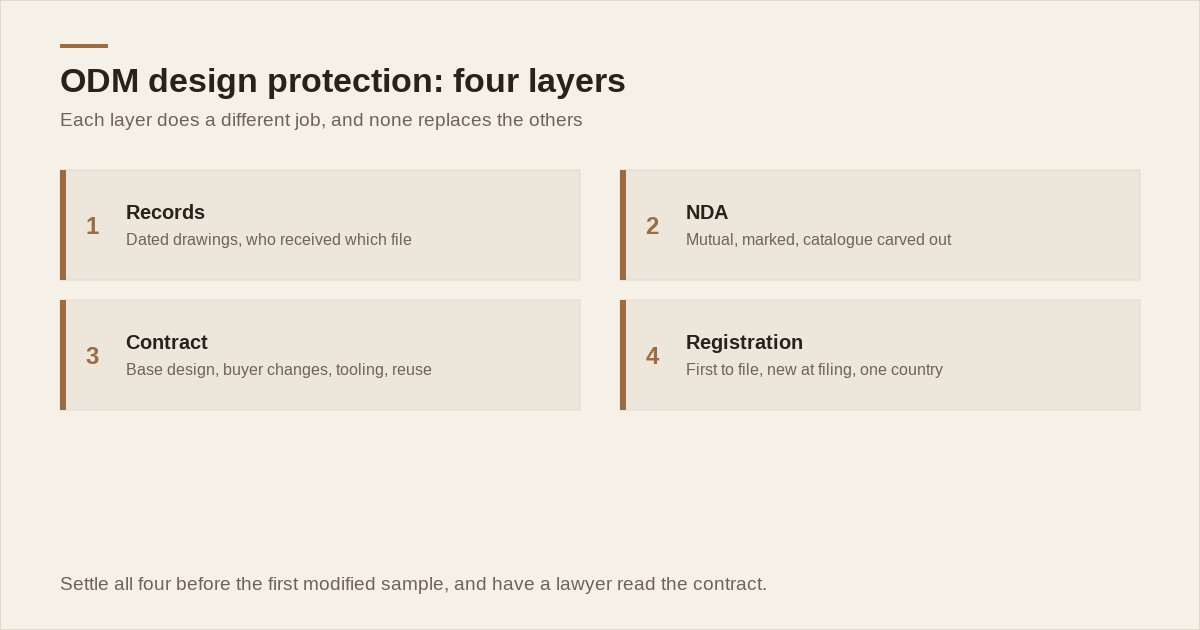
In an ODM deal your factory designed the product, so the design is yours until a buyer’s changes, money or paperwork say otherwise. To keep it that way, settle three things in writing before the first sample: who owns the base design, who owns the changes the buyer asks for, and what you may sell to other buyers. An NDA protects what you hand over in confidence, a contract decides ownership and a registration decides who can stop a copier. This guide is for the owner or export sales engineer of a furniture factory in Vietnam. Our importer-side guide, OEM vs ODM furniture in Vietnam, explains the two models. This one covers what the shop should protect. It is general information, not legal advice, so have a lawyer who knows Vietnamese IP law read your contract.
Which kind of ODM job is it?
Most disputes start because the two sides think they are in different models. Name the job in the first email.
| Job | What the buyer brings | Base design | The buyer’s changes | Can you sell it to others? |
|---|---|---|---|---|
| Catalogue ODM | A logo, a colour, a carton | Yours | None | Yes, unless you agreed otherwise |
| Modified ODM | A change to size, joint, finish or parts | Yours | Settle in writing | Only what the contract allows |
| OEM | A full design | The buyer’s | The buyer’s | No, for the buyer’s design |
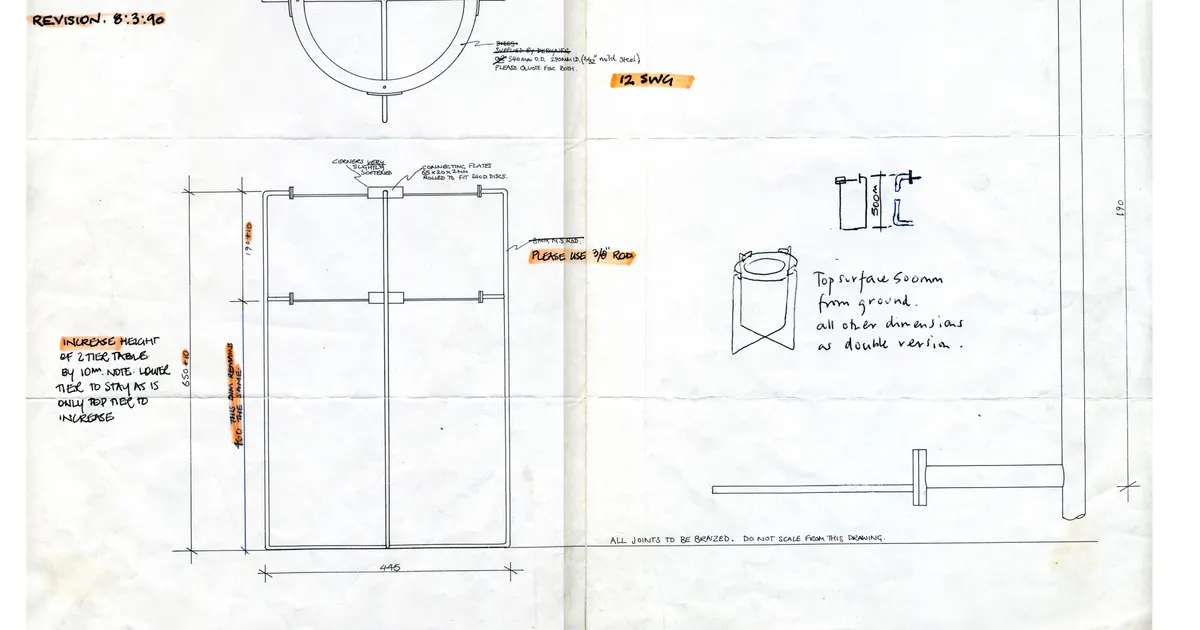
The middle row is where you need paper. A modified ODM piece sits on your structure with the buyer’s idea on top, and neither side can tell later where one stops. Agree before sampling what the buyer’s changes are, in a drawing with a revision date, and write whether you may reuse the base design without them.
What an NDA does and does not do
An NDA is a record that both sides agreed what is confidential. Vietnam’s IP Law, in the 2005 text on WIPO Lex, protects a business secret when three conditions hold: it is neither common knowledge nor easily obtained, it gives its holder an edge in business and the owner keeps it confidential through necessary measures. The third condition is yours to meet. A drawing you email to ten buyers without marking it is hard to call a protected secret.
Points to settle in the NDA from the factory’s side:
- Carve out what is already yours. Your catalogue, your standard joints and your general know-how should be outside the “confidential information” definition. A broad NDA can otherwise stop you from selling a piece you designed.
- Make it mutual. The buyer’s drawings need protection and so do your jigs, finish recipes and costings.
- Say what is marked. “Confidential” on each drawing and each file name makes the line clear to both sides.
- Set a term and a return rule. Say how long the duty lasts and what happens to drawings and samples when the project ends.
- Pick the language and the governing law on purpose. Have your lawyer advise, because this decides where a dispute is heard.
Then do the practical part. Keep an index of who received which drawing and when, send files from one account and limit who in the factory can open them. These steps are the “necessary measures” the law asks for, and they also help if you need to show who had what.
Tooling: jigs, templates, programs and moulds
Tooling is where ownership becomes physical, because the item sits on your floor. Our furniture sample guide notes that without an agreement the factory holds its own working drawings and any jigs it built. That is a start, not a policy.
| Item | Question to settle in writing |
|---|---|
| Assembly jigs and clamping fixtures | Who paid, who owns, where stored |
| Router templates and CNC programs | Does the buyer get the file or only the part |
| Moulds, forms and press tools | Owner, and may you use them for another customer’s order |
| Sample and pre-production pieces | Who keeps them, and for how long |
| Packaging dies and cartons | Who owns the die; the brand’s artwork stays with the brand |
Three rules keep the argument short:
- List each item with a photo and a tag at the start. Write the buyer’s model code on the tag.
- Separate owning from using. If the buyer owns a jig, say whether you may use it for anyone else. If you own it, say whether the buyer may move production elsewhere and take the drawings.
- Write the end of the relationship. Say what happens to tooling after the last order: return, destroy or keep. Without that line the jig stays on your floor and so does the dispute.
Who owns the design under Vietnam’s IP Law
The WIPO Lex page we read is the 2005 text of Law 50/2005/QH11. The law has been amended since, so check the current version with a lawyer. Under that text, Article 86 sets who has the right to register a design:
- 86.1(a) the author who created it with his own effort and expense;
- 86.1(b) an organisation or individual who supplied the funds and material facilities to the author through job assignment or hiring, unless the parties agreed otherwise;
- 86.3 when several parties created or invested in it together, all of them hold the right and may exercise it only by consensus;
- 86.4 the right may be assigned by written contract, even after an application is filed.
For a factory this has three consequences. A buyer who pays for a design may have a claim to register it, unless your contract says otherwise. A design built by both sides can only be registered by agreement, which is hard to get after the relationship sours. And any transfer should be a written contract. So write one clause that says who holds the right to register the base design, who holds it for the buyer’s changes and whether either side may register without the other. This article concerns the right to register a design. We did not look at copyright.
Need a quote for this product? Get matched with a Vietnam wood factory
Registration: first to file, new at filing, one country
If you want to be able to stop a copier, you need a registration, not only an NDA. Four points from the same text and from a business publication’s summary:
- First to file. Article 90.1 says protection goes to the valid application with the earliest priority or filing date. If a buyer files your base design in its own name first, you may have a problem.
- It must be new at filing. Article 65.1 says a design is new when it differs significantly from designs publicly disclosed before the filing or priority date. Article 65.4 gives a six month grace period only in three listed cases: publication by someone else without your permission, a scientific presentation by you and display by you at a national or recognised international exhibition. We did not see ordinary catalogue or website publication on that list, so file before you publish.
- Function is not protected. Article 64.1 excludes an appearance dictated by the technical features of the product. A bracket shaped by load is weak ground, and a distinctive proportion or profile is stronger.
- Term. Article 93 gives five years from filing, renewable twice for five years each, so fifteen years at most. Vietnam Briefing, a business publication, gives the same term and says the Intellectual Property Office of Vietnam handles filing and examination.
Protection stops at the border. The US Patent and Trademark Office says design patent rights extend only within the United States, and the same is true of a Vietnamese registration: it covers Vietnam. Which countries to file in is a decision for you and your buyer. Vietnam also joined the Hague system for international design registration, and a law firm’s note says the Geneva Act took effect there on 30 December 2019, so an attorney can tell you whether it fits. Do not file in a buyer’s market without advice.
Whether to register is a business choice. A catalogue of fast-changing models may not justify it. A few signature pieces that sell for years might.
A checklist before the first modified ODM sample
- Drawing of the base design with a revision date, kept by you.
- Buyer’s change request in writing, in a drawing with its own revision date.
- Mutual NDA signed, with your catalogue carved out.
- One clause on who holds the right to register the base design and the changes.
- One clause on what you may sell to other buyers.
- Tooling list with photos, owner and end-of-orders rule.
- Index of who received which file.
- A decision on registration, made before the design is shown publicly.
Mistakes that cause disputes
- Signing a buyer’s NDA that covers your own catalogue.
- Sending the same drawing set to every quote request without a marking.
- Letting a buyer’s samples pile up with no record of whose they are.
- Using a buyer-paid jig for another customer’s order.
- Treating an email chain as an ownership agreement.
- Showing a new design at a fair or online before deciding whether to register.
Talk to us
We are a matching service. We do not draft contracts, register designs or give legal advice. If your factory builds furniture in Vietnam and wants export requests that fit what you already make, talk to us through the for suppliers page. We reply within 24 business hours.
Sources
- WIPO Lex: Law No. 50/2005/QH11 on Intellectual Property of Viet Nam, 2005 text (Articles 64, 65, 84, 86, 90, 93)
- Vietnam Briefing: Industrial design registration and protection in Vietnam
- Tilleke & Gibbins: How the Hague Agreement affects industrial design registration in Vietnam
- USPTO: Design patent application guide
The WIPO Lex page is the 2005 text of the law, which has been amended since (we did not read the amended versions), and the two other business pages are secondary summaries. Article numbers and terms can change, so confirm each point with a lawyer who practises Vietnamese IP law before you rely on it.
Frequently asked questions
Who owns a furniture design when a buyer asks an ODM factory to change it?
It depends on what the two sides wrote down. Vietnam's 2005 IP Law gives the right to register a design to its author and also to whoever supplied the funds and facilities through assignment or hiring, unless the parties agree otherwise. When both sides invest, both hold the right and can exercise it only together. Write the answer into the contract before the first sample.
Does an NDA stop a buyer from copying my ODM design?
An NDA covers information you gave in confidence. It does not cover a design you already show in your catalogue or on your website. Vietnam's IP Law protects a business secret only if it is not common knowledge, gives an edge and the owner takes necessary steps to keep it confidential, so mark and control what you share.
Who owns the jigs and templates a buyer paid for?
Whoever the contract says. Without a written clause the argument starts after the last order. List each jig and template, say who paid, who owns it, where it is kept and what happens to it when orders stop. Ownership of a jig does not by itself give anyone the right to use the design.
Should a factory register its ODM designs in Vietnam?
Registration is a business decision, and an IP attorney should advise on it. The facts to weigh: Vietnam follows first-to-file, a design must be new when filed and protection covers one country. A design shown publicly before filing may no longer count as new, so decide before the catalogue goes out.
Need a quote for this product?
Send the specification. We match you with up to 3 Vietnamese wood factories and reply within 24 business hours.
Get matched with a Vietnam wood factory