Guides / Materials
Rattan, Bamboo and Rope in Vietnamese Furniture
November 21, 2026
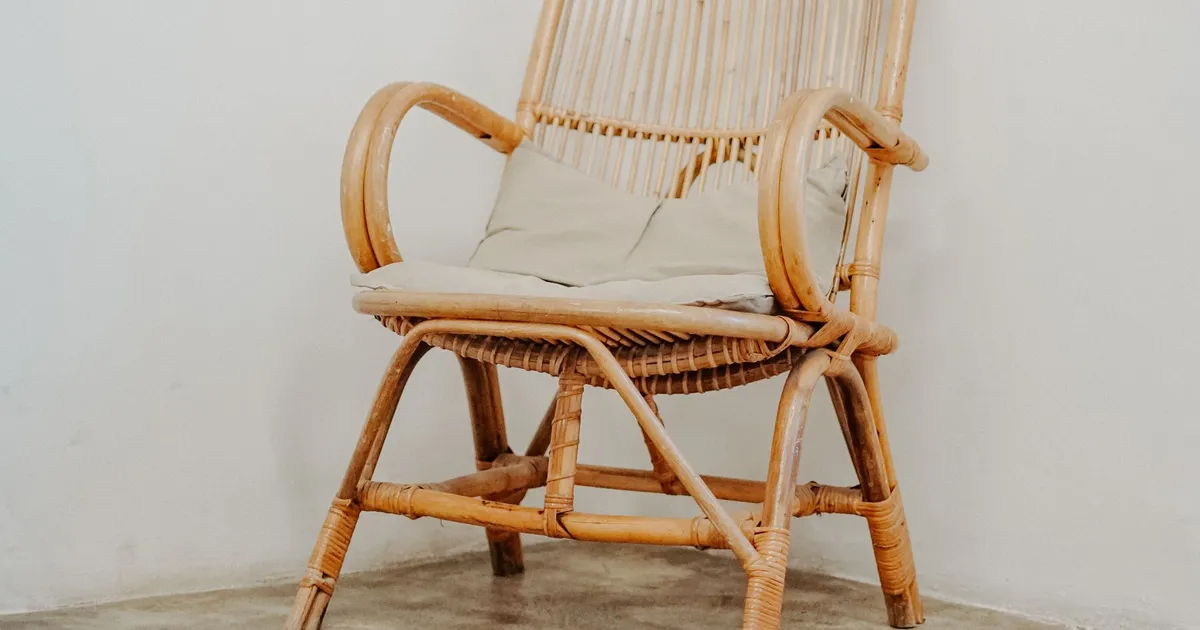
Vietnam is known for handcrafted rattan, bamboo and rope furniture. Chairs, daybeds, side tables, baskets, lamp shades and storage units come from workshops that range from family run villages to large plants with hundreds of weavers. The materials look related but behave differently, and each brings its own checks for strength, finish and shipping.
This guide explains the main materials, how a typical piece is built, where problems arise and what to write into an order.
The materials
Rattan. A climbing palm that grows in tropical forests and plantations. The stem is solid, strong and flexible. It is cut into poles for frames and into strips and peel for weaving. Much of the cane used in Vietnam is imported from neighbouring producing countries, with a smaller share grown locally.
Bamboo. A giant grass. Poles are used as round frames, and strips are laminated into boards or woven into mats. Bamboo is strong and light, grows fast and is widely planted. Treatment is critical, since untreated bamboo attracts beetles.
Rope and cord. Ropes made from natural fibres such as seagrass, banana fibre, jute or paper cord, and synthetic ropes from polypropylene or polyethylene. They are woven or wrapped over frames for seats, backs and decorative panels.
Other natural fibres. Water hyacinth, rush and sea grass appear in woven furniture and baskets. They are used for indoor pieces and decorative items.
Synthetic wicker. Extruded flat or round strands of polyethylene, made to look like rattan. They are woven over metal frames and sold as outdoor furniture, since they resist sun and water better than natural fibres.
How a typical piece is built
Natural rattan chairs and tables follow a set of steps.
- Selecting and sorting poles. Cane is graded by diameter, straightness and colour. Poles with cracks or insect holes are rejected.
- Cleaning and drying. The cane is cleaned, sometimes boiled or steamed and dried to a low moisture content.
- Bending. Workers heat poles and bend them over forms to make curves. Bent joints are held while they cool.
- Frame assembly. Poles are joined by nails, screws, glue and binding. Strong frames use wooden dowels and reinforcing inside the cane.
- Weaving. Peel, strip or core is woven onto the frame by hand, in patterns such as open weave, closed weave or herringbone.
- Sanding and finishing. The surface is sanded and then lacquered, stained or left natural.
- Quality check and packing. Weave tension, joints and surfaces are checked, and the piece is packed.
Bamboo pieces start with poles that are treated, dried and shaped. Rope furniture often has a wood or metal frame, and the rope is wound or woven on top.
Frames: where the strength is
The look of a piece comes from the weave, but strength comes from the frame. A rattan lounge chair with a thin cane frame feels light and flexes under load. A chair with a frame of hardwood or steel inside the cane carries more weight and lasts longer.
Ask what is inside the frame. Typical constructions include solid cane poles, wood reinforced cane, steel tube with rattan wrap and aluminium frame with synthetic weave. Each has a different weight rating, cost and lifespan. For commercial use in cafés and hotels, ask for a load rating and a test on the assembled product, as explained in the furniture test standards guide.
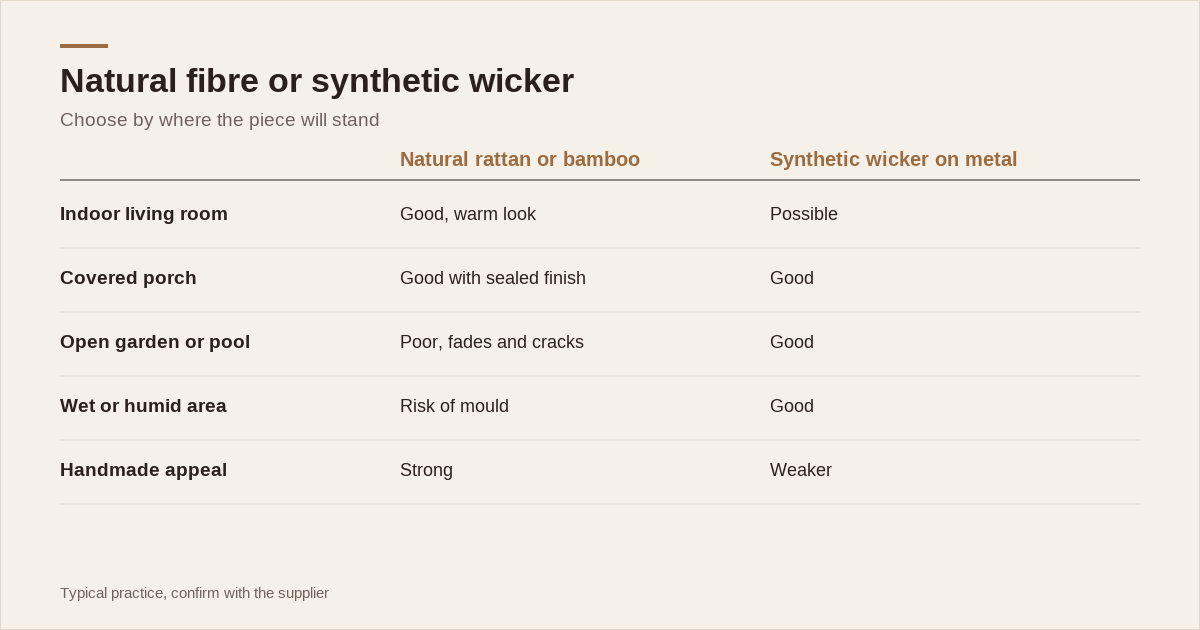
Natural or synthetic: choosing by use
| Use | Natural rattan or bamboo | Synthetic wicker over metal |
|---|---|---|
| Indoor living room | Good, warm look | Possible |
| Covered porch or sunroom | Good with sealed finish | Good |
| Open garden or poolside | Poor, fades and cracks | Good |
| Commercial café or hotel | Possible, wear is visible | Common |
| Wet or humid area | Risk of mould | Good |
| Handmade appeal | Strong | Weaker |
Be honest in your listing. A customer who buys natural rattan and leaves it in the rain will blame the product. The outdoor wood guide explains how weather affects different materials, and the same logic applies to natural fibres.
Finishing
Natural fibres take lacquer, oil, stain and paint. Plants may apply a clear lacquer to protect the surface and keep the colour, or stain to unify colour between poles. The finish should flex with the fibre, so a brittle coating cracks at bends and weave joints.
Colour consistency is a challenge, since natural cane varies. Plants sort poles by colour and stain to match. Approve a finished sample of the full piece, not a small swatch, because large pieces show variation that a swatch hides. The finishes guide lists the common systems.
For bamboo, lacquer seals the surface and slows moisture exchange. For rope, a stiffening or water repellent treatment may be applied, but heavy coatings change the feel.
Insects, mould and moisture
Natural cane and bamboo contain starch and sugar that attract powderpost beetles and other pests. Mould grows when material is damp and warm, which describes the inside of a container on a sea voyage.
Plants control these risks with several steps:
- Boiling or steaming cane, which removes sugars and kills insects.
- Treating with approved preservatives or heat.
- Drying to a stated moisture content and measuring it.
- Storing in a dry, ventilated place.
- Packing with moisture control such as desiccant and a clean, dry carton.
Ask for the moisture reading at packing and the treatment method. Some destination countries inspect plant based products at the border, and rules on pests and treatment vary, so ask your customs broker which documents your market requires. A shipment held for pests costs more than any saving from skipping treatment.
Need a quote for this product? Get matched with a Vietnam wood factory
Legal and sourcing notes
Rattan and bamboo are plant products, and the rules on legal origin and due diligence differ from those on timber. Some producing countries restrict raw cane exports to protect local industry, which affects where cane comes from and what it costs. Ask the plant for the origin of the cane and the supplier name. Check with your customs broker whether any rule on forest products applies to your goods in your market, since classification of rattan, bamboo and mixed wood products can differ. The legality documents guide explains the general approach to origin evidence.
Cushions, glass and add-on parts
Many rattan pieces ship with cushions, glass tops or fabric parts, and these add their own checks. Cushion foam density, fabric abrasion resistance and fire rules for upholstered items differ by market, so name the standard and ask for the fabric and foam data sheets. Glass tops need a stated thickness and tempering, and an edge finish that protects hands. Keep the cushion cover removable if the end customer will wash it.
Fit matters too. A cushion cut a few millimetres too large will not sit flat in a woven seat, and a cut too small slides. Approve cushions on the sample frame, not on a drawing, and check that the cushion colour in daylight matches the approved chip.
Cost drivers
Hand weaving is labour, and the cost follows weaving hours. A tight, intricate pattern may take twice the time of an open weave, so the price difference between two patterns can exceed the difference between two materials. Ask the plant for weaving hours per piece, and compare patterns on that basis.
Material cost matters less than many buyers expect for natural rattan. Cane price moves with supply and export rules in producing countries, and a plant that buys on the spot market passes the change into the quote. Synthetic wicker costs depend on the metal frame and the strand quality, and the frame often costs more than the weave. Ask what share of the price is frame, weave, finish and packing, and a pattern emerges on which line to negotiate.
Quality checks
A short list covers most defects in woven furniture.
- Check the frame by sitting, leaning and rocking the piece.
- Press the weave in several places for loose strands and uneven tension.
- Look at joints and binding for gaps and lifted ends.
- Run a hand over the surface for splinters and rough edges.
- Check colour consistency across the set.
- Measure moisture content in the cane or bamboo and record it.
- Open one packed carton from the lot and look for mould and crushed weave.
The quality inspection guide shows how to place these checks in an inspection plan.
Lead time and handmade variation
Handwork means variation. Two chairs from the same order differ slightly in weave pattern and colour, and that variation is part of the appeal. Set a tolerance in the specification and approve a sample that shows the allowed range.
Lead time depends on weaver capacity and season. Many workshops are busy before the year end shipping peak, and weather affects drying. The lead time guide explains how to plan, and a pilot batch before the full order helps confirm that the plant can repeat the sample.
What to put in the specification
For each piece, state the material (natural rattan, bamboo, rope fibre or synthetic wicker), the frame construction, the weave pattern, the finish, the moisture content at packing, the treatment against pests, the load rating, the packing method and the documents required. Include photos of the weave pattern you want and a statement of the allowed variation.
To compare factories that work with rattan, bamboo and rope, send your specification through the RFQ page. The matching service finds up to three Vietnamese wood factories and replies within 24 business hours.
Frequently asked questions
Is rattan a wood?
No. Rattan is the stem of a climbing palm, and bamboo is a giant grass. Both are harvested, dried, steamed and bent or split into strips, so they behave differently from timber. They have no growth rings, they bend when heated and they are strong in tension along the stem.
Can natural rattan furniture be used outdoors?
Natural rattan and bamboo suit indoor and covered spaces. Sun, rain and cold cycles crack and fade them, so outdoor furniture usually uses synthetic fibre such as polyethylene woven over an aluminium or powder coated steel frame. Always ask which fibre is used and request a weathering test for outdoor pieces.
How do factories stop insects and mould in rattan?
Common steps are boiling or steaming the cane, drying it to a low moisture content, treating it against beetles and storing it in dry conditions. Mould appears when cane or finished pieces are packed damp. Ask for moisture readings before packing and for the treatment method used.
Need a quote for this product?
Send the specification. We match you with up to 3 Vietnamese wood factories and reply within 24 business hours.
Get matched with a Vietnam wood factory