Guides / Materials
Pine Furniture From Vietnam: Imported Radiata and Local Pine
November 19, 2026
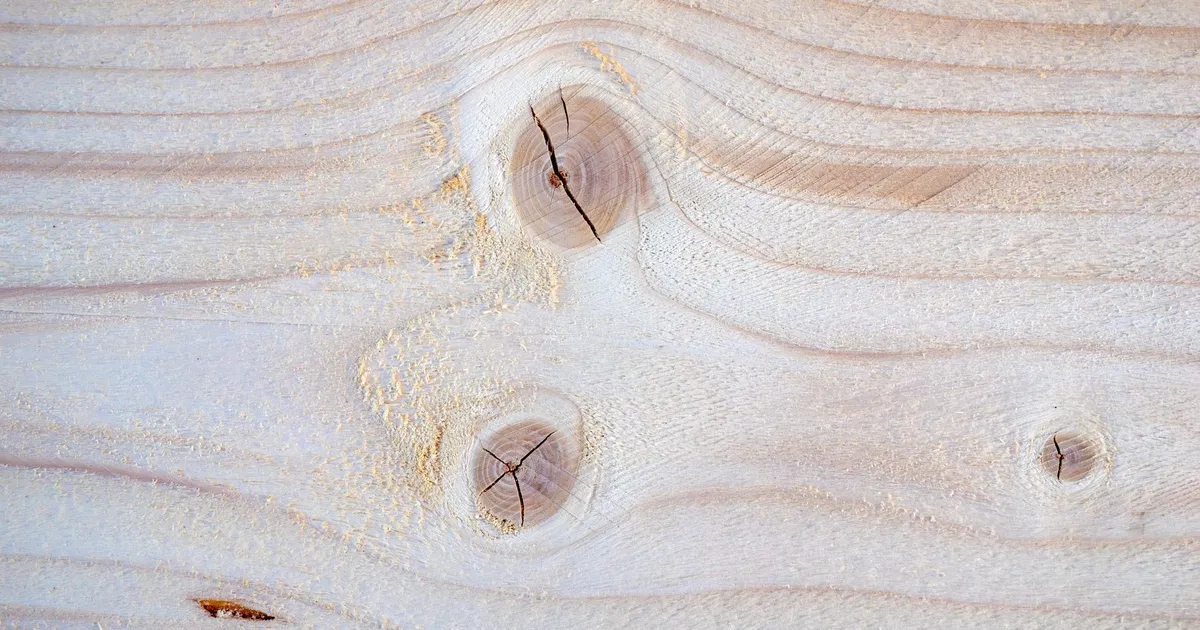
Pine is the wood most buyers think of when they want light colour, a casual look and a lower price. In Vietnamese factories it appears in kids beds, bookcases, wardrobes, tables with a rustic finish and a large volume of painted furniture. Two supplies feed it: imported radiata pine, and pine grown in Vietnam. They look similar on a quote and behave differently on the factory floor.
This guide explains the two supplies, the strengths and limits of pine in furniture and the specification points that keep a pine order on target.
Imported radiata pine
Radiata pine is grown in managed plantations in several southern hemisphere countries, and it is the standard imported pine in Vietnamese furniture plants. It arrives as sawn lumber, as finger jointed and edge glued stock, as mouldings and sometimes as logs.
Radiata is fast growing and uniform. The wood is pale cream to light yellow, with a straight grain and a visible growth ring pattern. Knots are common and range from small sound knots to large loose ones, depending on the grade. Density is low to medium, so the wood is light and easy to cut and sand.
Plantation grading in the producing countries separates clear grades for mouldings and joinery from knotty grades for framing and furniture. Furniture plants usually buy the knotty or select grades and cut around defects, or buy finger jointed stock where the defects are already removed.
Imported pine usually comes with documentation from the exporting country, and plantation origin makes legal checks simpler. The legality documents guide explains what to ask for.
Local Vietnamese pine
Vietnam has pine plantations and natural stands, mostly in the central highlands and the north. The wood supply is smaller than imported radiata in furniture use, and quality varies more. Local pine often has more resin, more knots and more variation in density and ring width than plantation radiata.
Local pine suits lower cost products, rustic looks and parts that will be painted or hidden. It also suits buyers who want a story of local origin. It needs more careful sorting and drying, and a buyer should ask for a finished sample made from the real lot.
Whichever pine is used, ask the plant to name the species and the origin on the quote. Pine as a word covers many species with very different resin content and density.
Strengths and limits of pine
| Property | Effect in furniture |
|---|---|
| Light weight | Easy to move and ship, good for beds and bookcases |
| Soft surface | Dents and scratches easily, which some designs accept as character |
| Knots | Visible and often wanted in rustic styles, a problem for clear finishes |
| Resin | Can bleed through paint and stain, needs sealing |
| Machining | Cuts and sands easily, but fuzzy grain can appear on soft areas |
| Price | Lower than most hardwoods |
| Screw holding | Lower than hardwoods, needs larger or longer fittings in some joints |
The soft surface is the main limit. A dining table in pine shows plate rings and chair marks within months, and some customers love that and others return the table. Describe the expected wear in the product listing, and consider a harder finish or a different species for heavy use surfaces.
Resin, knots and finishing
Pine finishes well when the plant manages resin and knots.
Resin pockets and streaks. Resin can ooze from pockets and from knots under heat, even after kiln drying. Plants reduce the risk by sorting out resinous boards, by sealing knots with a shellac or a dedicated knot sealer and by kiln drying at a temperature that sets the resin. Ask how the plant treats knots before painting.
Knots under paint. A knot can bleed through white paint as a yellow or brown stain. A sealer coat solves it, and a plant that skips sealing saves a little time and creates a defect that shows after shipment.
Blotchy stain. Pine takes stain unevenly. A pre stain conditioner, a gel stain or a pigmented lacquer gives a more even result. The finishes guide covers the finish systems.
Dents and care. A harder topcoat helps pine resist marks, but it does not make it a hardwood. Tell end customers what to expect.
Pine in finger jointed and panel form
Much pine furniture uses finger jointed and edge glued panel. Short clear pieces are joined into long strips, and strips are glued into wide panels, as explained in the panel guide. The construction removes large knots and gives better stability than a wide solid pine board, which tends to cup.
Under paint, the joints disappear. Under a clear or stained finish, they show, and a buyer should approve the look in advance. Imported finger jointed radiata stock is common in Vietnamese plants because it comes with consistent quality and makes the plant’s job easier.
Grades buyers meet on a pine quote
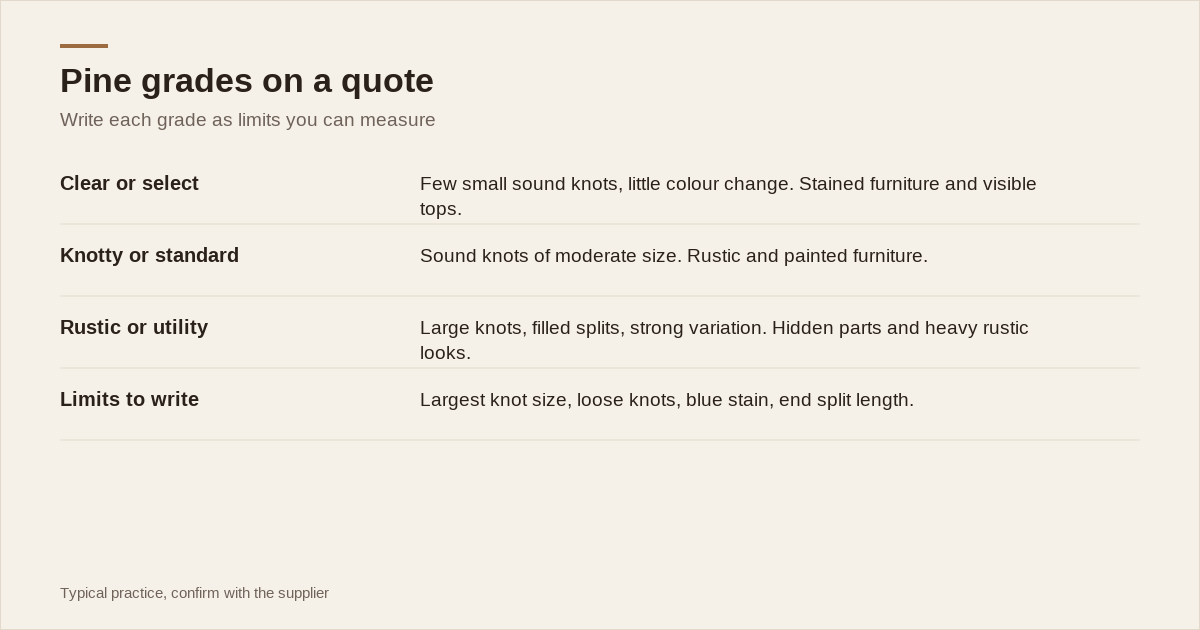
Pine grades are not uniform across suppliers, so ask the plant to describe its grades in terms you can check. A common ladder looks like this.
| Grade wording | What to expect | Fits |
|---|---|---|
| Clear or select | Few knots, small and sound, little colour variation | Stained furniture, visible tops |
| Knotty or standard | Sound knots of moderate size, some colour change | Rustic and painted furniture |
| Rustic or utility | Large knots, splits filled, strong variation | Hidden parts, heavy rustic looks |
Write the grade as limits: largest knot diameter, whether loose knots are allowed, whether blue stain is allowed and how long an end split may be. These limits turn a wording argument into a measurement at inspection.
Need a quote for this product? Get matched with a Vietnam wood factory
Why the same pine product looks different in two lots
Pine varies from log to log more than many plantation hardwoods. Growth ring width, resin content and colour depend on the age of the tree, the climate and the part of the log. Two lots of the same grade can look different once finished, even with the same stain.
Plants manage this by sorting boards by colour and ring pattern before gluing panels, and by finishing a full production sample from the same lot. Ask whether the plant sorts, and ask for a photo of boards laid out before pressing. For large programmes, ask the plant to buy enough lumber for the whole order in one purchase, since a second purchase brings a second colour range.
Inspection checks for pine orders
A short inspection plan catches most pine problems. Measure moisture content at several points on several parts. Look for resin bleed on a sample left in a warm room for a day. Press a thumbnail into a hidden area to compare softness between lots. Check that knots under paint are sealed by cutting into a painted knot and looking at the coating. Compare the finished colour against the approved sample in daylight.
Pine rewards early checks, because its defects, resin, blue stain and soft dents, are easy to see before packing and difficult to repair after. The quality inspection guide shows how to place these checks in a standard inspection.
Safety and kids furniture
Pine is popular in children’s furniture, such as bunk beds, cots and toy storage. These products face strict safety rules in major markets, covering structure, gaps and entrapment, stability and chemicals in paints and coatings. The rules differ between the United States, the European Union and others, and a product that passes in one market may not pass in another.
If your design is for children, name the safety standard in the order, ask the plant for test reports from an accredited lab and plan for testing before shipment. The furniture test standards guide explains how to request the right tests. Coatings on children’s products also have limits for heavy metals and certain chemicals, so ask for the coating supplier’s data sheet.
Moisture and stability
Pine moves with humidity like other woods. Radiata is relatively stable once kiln dried, but a plant that rushes drying or stacks wet lumber produces bowed and twisted parts. Resinous local pine can be more difficult. The moisture content guide lists target ranges for export furniture.
Blue stain is a pine specific issue. A fungus that stains sapwood blue grey during storage can appear on pine that sat wet. It does not weaken the wood much, but it spoils the look under clear finishes. Ask whether blue stain is allowed and where.
Mixing pine with other materials
Many pine products mix pine with other materials to control cost and improve performance. A bookcase may use solid pine for the frame and thin plywood for the back. A bed may use pine rails with hardwood slat supports. A dining table may use a pine top on hardwood legs to resist wear where hands and chairs touch the wood.
These mixes are sensible when they are described. They cause disputes when a buyer assumes a product is all pine and discovers other woods, or when a plant swaps a hardwood part for pine to save money. Ask for a bill of materials that lists the species of each part, and keep it with the approved sample.
Cost position and where pine fits
Pine usually costs less than acacia, rubberwood or imported hardwoods, so it fits value programs, kids lines and painted products where the surface is not the selling point. Savings narrow if the design needs clear grade stock, extensive sorting or heavy sealing. The acacia versus rubberwood guide shows how the common local alternatives compare on price and behaviour.
What to put in the specification
For each pine part, state the species and origin, the grade or knot rule, the construction (solid, finger jointed or edge glued), the thickness, the moisture content target, the sealing and finish system, the rule on resin and blue stain, and any safety standard. Add a rule on substitution: no change of species or origin without written approval.
To compare factories that make pine furniture, send your specification through the RFQ page. The matching service finds up to three Vietnamese wood factories and replies within 24 business hours.
Frequently asked questions
Is pine a good wood for furniture?
Yes, for the right products. Pine is light, easy to machine and takes paint and stain, so it suits kids furniture, bookcases, bed frames and rustic designs. It is a soft wood that dents and scratches more easily than oak or acacia, so it is a weaker choice for a heavy use dining table unless the customer likes a worn look.
Where does the pine used in Vietnamese factories come from?
A large share is imported radiata pine from plantations in countries such as New Zealand and Chile, sold as sawn boards or finger jointed stock. Some pine is grown in Vietnam, mostly in the highlands, and used for lower cost or rustic products. Ask for the origin of the specific lot.
Why does pine look blotchy when stained?
Pine has areas of different density and resin content, and they absorb stain at different rates. Plants reduce blotching with a conditioner or sealer coat before the stain, or they use paint or a tinted lacquer instead. Approve a stained sample made on the same grade of wood as production.
Need a quote for this product?
Send the specification. We match you with up to 3 Vietnamese wood factories and reply within 24 business hours.
Get matched with a Vietnam wood factory