Guides / Materials
Imported Oak and Ash in Vietnamese Furniture Factories
November 11, 2026
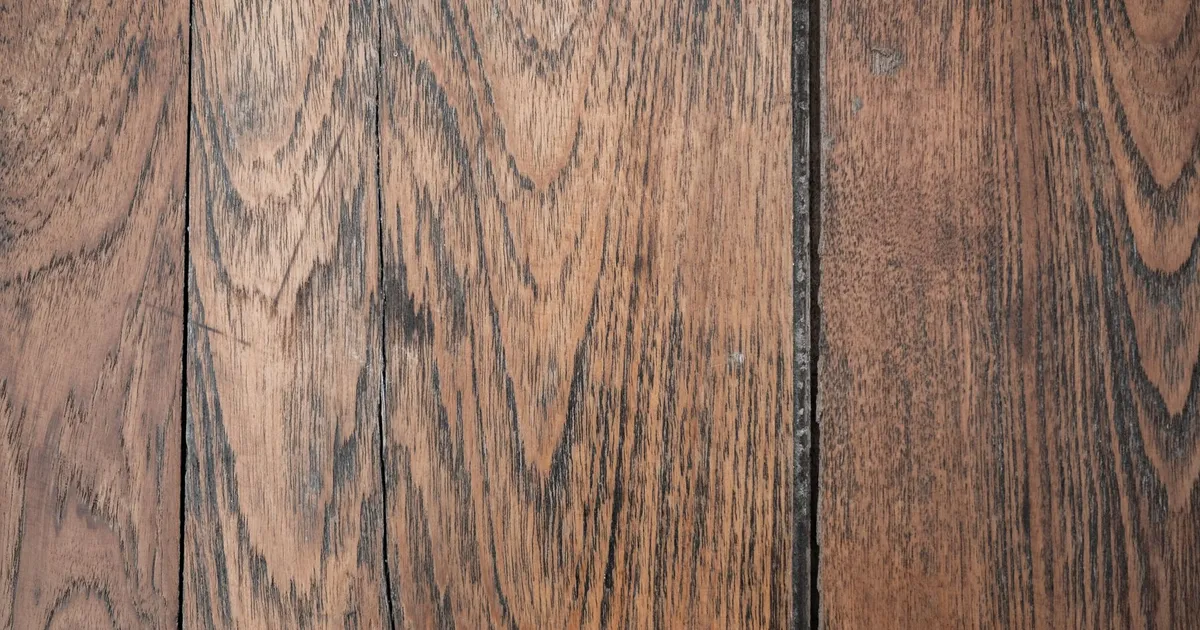
Vietnam grows plantation acacia and rubberwood at scale, but it does not grow oak or ash for furniture. Yet a large number of Vietnamese plants make oak and ash dining sets, bedroom pieces and chairs. They do it by importing sawn lumber, veneer and sometimes logs from North America and Europe, and then drying, cutting, jointing and finishing the wood in country.
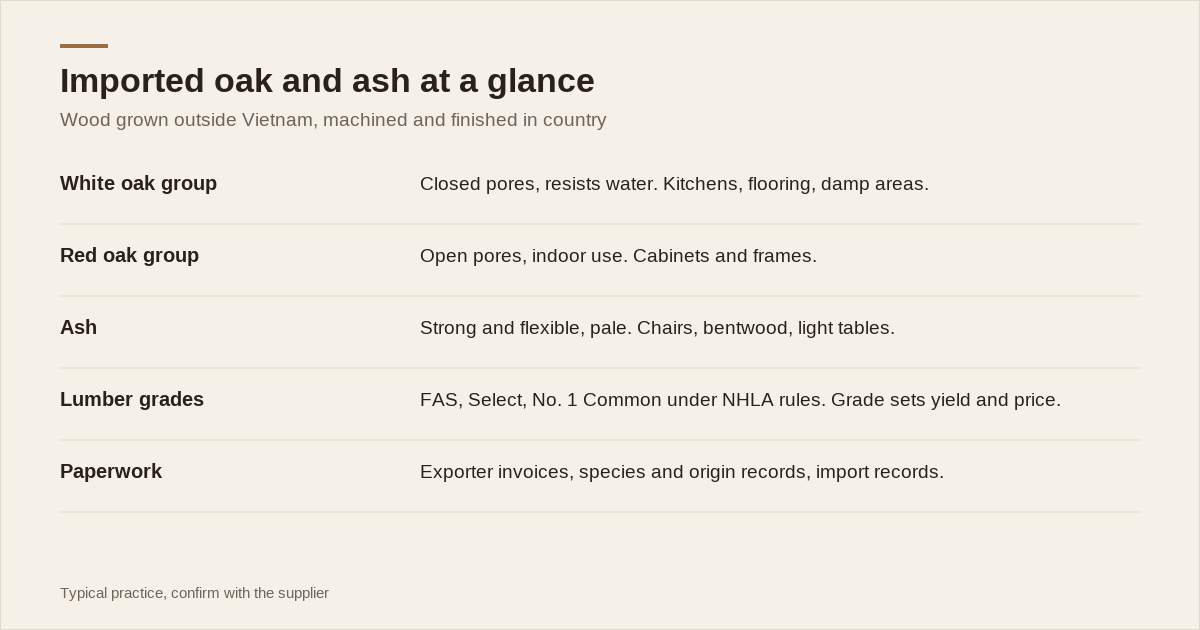
For a buyer, this changes the questions. The wood has a long supply chain before it reaches the plant, the price follows world hardwood markets and the legal documents come from two countries instead of one. This guide explains the species, the grades and the checks that matter.
Why Vietnamese plants import oak and ash
Customers in the United States, Europe, Japan and Korea ask for oak and ash because the wood suits their taste and their market. Oak signals durability and a traditional or modern farmhouse look. Ash gives a pale, clean look favoured in contemporary and Scandinavian styles. Plantation woods in Vietnam cannot match these looks with a clear finish, so plants import the wood.
Importing lets a Vietnamese plant offer the species at a lower total cost than a high wage country, because labour, finishing and overhead cost less. The wood itself costs about the same or more than it would in the exporting country, plus shipping, so the saving comes from labour and not from the log.
Large furniture clusters in the south, around Ho Chi Minh City and Binh Duong, and in Dong Nai handle most imported hardwood. The manufacturing regions guide explains why.
The oak species groups
Oak is a group of species, and the group matters more than the word oak.
White oak group. American white oak and European oak (often sold as French or Slavonian oak) share the closed pore structure. The wood is hard, heavy and resists water. It is used in kitchens, flooring, outdoor pieces and furniture that will meet damp.
Red oak group. American red oak has open pores and a pinkish tone. It is slightly less dense and less water resistant, and it is cheaper in many markets. It is the usual choice for indoor furniture, cabinet frames and flooring.
A quote that says only “oak” may mean either. The price gap is real, and a buyer who thinks they bought white oak and receives red oak has a good reason to complain, so name the group in the specification.
Ash
Ash is a ring porous hardwood with a pale cream to light brown colour. It is strong and flexible for its weight and takes steam bending, which makes it a classic chair wood. It also finishes well and stains evenly when it is sorted for colour.
American white ash and European ash are the main sources. Tree disease has reduced supply in parts of North America, and price and availability change from year to year. Plants that rely on ash keep stock, and a plant without stock may offer a substitute species. The species substitution guide explains how to deal with that conversation.
Lumber grades
Imported hardwood is sold to grading rules, and the rule used tells you what you are buying.
| Grading rule | Typical grade names | What it means for furniture |
|---|---|---|
| NHLA (North America) | FAS, Select, No. 1 Common, No. 2A Common | FAS has the longest clear cuttings, No. 1 Common suits most furniture parts |
| European rules | Prime, Select, Rustic and country specific systems | Appearance based, vary by exporting country |
| Plant internal | A, B, C or Prime, Standard, Rustic | Defined by the factory, not by a standard |
Grade sets the yield, which is the share of the board that becomes usable parts. FAS wood gives a high yield of clear parts at a higher price. No. 1 Common gives a lower yield at a lower price, and it is common for parts that are short or that hide knots. A factory that quotes FAS but delivers No. 1 Common changes the price per usable part, so ask for the grading rule in the quote and ask for a photo of the lot.
Drying and moisture
Imported lumber arrives air dried or kiln dried, and the plant may re dry it. Oak is a dense wood that dries slowly and can check, honeycomb or collapse if forced. Ash dries more easily but still needs careful schedules.
The target moisture content for export furniture depends on the destination climate, as covered in the moisture content guide. Oak moves with humidity, and a table top machined at the wrong moisture will cup or split after shipping. Ask how the plant checks moisture on arrival, after kiln drying and before machining.
Price drivers
Four items drive the price of oak and ash furniture.
- Lumber price. It follows world hardwood markets, exchange rates and freight. It changes during the year, so a quote has a validity period.
- Grade and yield. A higher grade costs more per cubic metre but yields more good parts.
- Thickness and width. Thick, wide parts need thick, wide boards, which are scarcer and cost more.
- Species group. White oak costs more than red oak in many markets.
Ask the plant for a bill of materials with the volume of lumber per product. It lets you separate the cost of wood from the cost of labour and finishing, and it shows whether a price change comes from the market or from the plant.
Need a quote for this product? Get matched with a Vietnam wood factory
Legal paperwork
Imported hardwood carries documents from the exporting country and from Vietnam. A plant should be able to show the supplier invoices, the packing lists, the species and origin declarations and the import records. Buyers in the United States ask for the information that supports Lacey Act declarations, and buyers in the European Union ask for the due diligence data required under EUDR, as explained in the legality documents guide and the EUDR guide.
The chain is longer for imported wood, so ask early. A plant that keeps records for each lot, with the exporter name, the harvest country and the species, can usually answer a request in days. A plant that does not may need weeks to rebuild the history.
Supply chain and lead time
Imported lumber adds a stage to the calendar. A plant that holds stock of the species and grade you need can start cutting at once. A plant that must order from an exporter adds the time for order, loading, sea freight and customs, often several weeks, before the wood arrives and needs a drying check.
Ask the plant three questions early: is the wood in stock, who is the supplier and when did the last shipment arrive. If the wood is not in stock, add the import time to the production schedule in the lead time guide, and ask for the order date of the lumber, which is a more honest milestone than a general promise.
Stock also protects price. A plant that bought lumber months ago holds a price that may be lower or higher than the market today, and the quote reflects it. If the market rises, a plant without stock may ask to reprice, so agree on a validity period and a rule for price adjustment in the order.
Quality risks with imported hardwood
Imported oak and ash carry risks that plantation woods do not.
Sapwood and colour variation. Oak and ash have pale sapwood next to darker heartwood. Under a stain the contrast shows. Specify whether sapwood is allowed, and approve a sample that shows the colour range.
Mineral streaks and stain. Some boards carry dark mineral streaks or blue stain. Allowed limits should be written down.
Mixed lots. A plant may combine boards from several shipments, and colour differs between lots. Ask the plant to sort and to cut all visible parts of one product from the same lot.
Grade drift. Grade is judged on the board, and the plant can deliver a lower grade than quoted when no one is checking. Ask for photos of the lumber stack at the start of the order and compare them with the sample.
Treat these items as normal natural variation that must be managed, not as defects to be argued about after shipment. The quality inspection guide shows how to define acceptable limits before production starts.
Oak and ash in finished products
Oak and ash suit different products. Oak does well in dining tables, sideboards, bed frames and cabinet doors, where its weight and grain give a solid feel. Ash suits chairs, benches, bentwood parts, drawer boxes and light coloured tables.
Both take lacquer, oil and stain, but they behave differently. Oak’s open pores need a filler or several coats for a smooth film, and tannins can react with iron in water or fittings and leave dark stains. Ash takes colour evenly but may show a strong grain contrast under a dark stain. Always approve a finished sample made from the real wood, as explained in the finishes guide.
What to put in the specification
For each part, write the species and group, the lumber grade and rule, the thickness, the moisture target, the construction (solid, finger joint, edge glued or veneer), the finish and the documents required. Add a rule that the factory may not change species or grade without written approval. Ask for the origin country of the lumber on the proforma invoice.
To compare factories that work with imported oak and ash, send your specification through the RFQ page. The matching service finds up to three Vietnamese wood factories and replies within 24 business hours.
Frequently asked questions
Is oak grown in Vietnam?
Not in commercial furniture quantities. Vietnamese plants that make oak or ash furniture mostly import sawn lumber or veneer from North America and Europe, then dry, machine and finish it in country. Always ask where the wood was grown and cut, because it affects legal paperwork and price.
What is the difference between white oak and red oak?
White oak has closed pores that resist water, so it suits kitchens, outdoor pieces and tight cooperage. Red oak has open pores that let liquid pass, so it is used mainly indoors. Both are called oak on a quote, so ask for the exact species group and the grade.
Why is ash popular for chairs?
Ash is strong for its weight, flexible and takes steam bending, which makes it a standard choice for chair frames, spindles and bent parts. Its pale colour accepts stain and clear finish well. Supply and price have been affected by tree disease in parts of its range, so check availability.
Need a quote for this product?
Send the specification. We match you with up to 3 Vietnamese wood factories and reply within 24 business hours.
Get matched with a Vietnam wood factory