Guides / Sourcing Guide
Kitchen Cabinets From Vietnam: Doors, Boxes and Duties
November 3, 2026
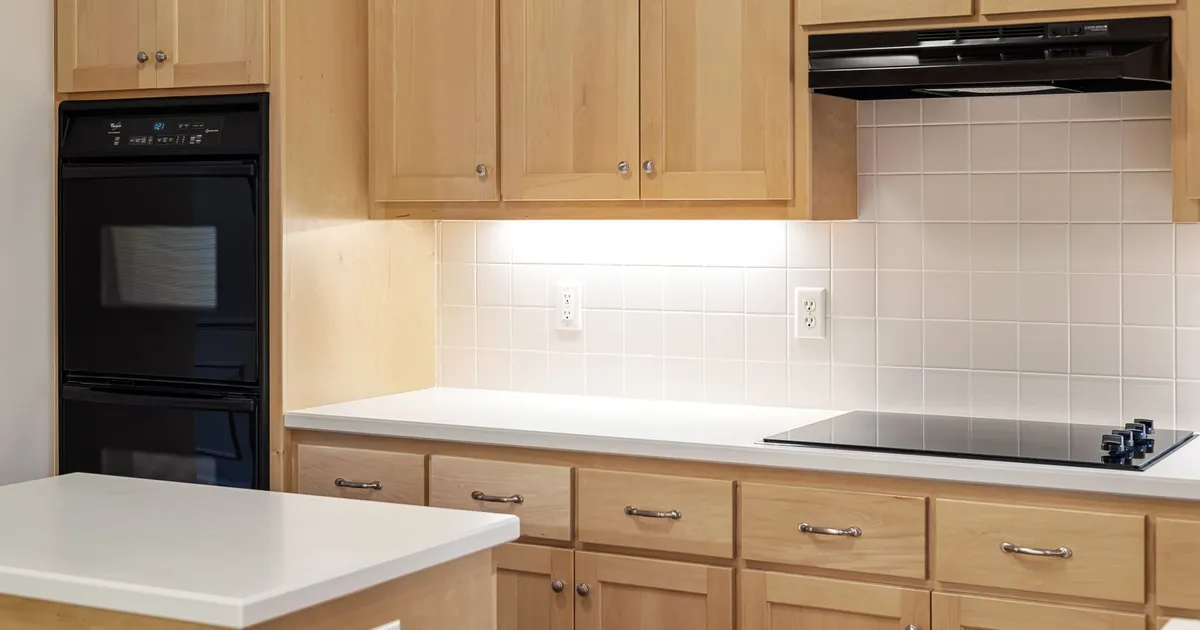
Kitchen cabinets are one of the largest furniture exports from Vietnam. Plants in the south build cabinets for builders, retailers and kitchen brands in North America, Europe, Japan and Australia. The product combines woodworking, panel technology, hardware and finishing, and in the United States it also carries trade rules that can change the landed cost more than any factory price difference.
This guide covers box and door construction, hardware, standards and the duty and origin questions to settle before a first order.
Cabinet styles and sizes
Two styles dominate.
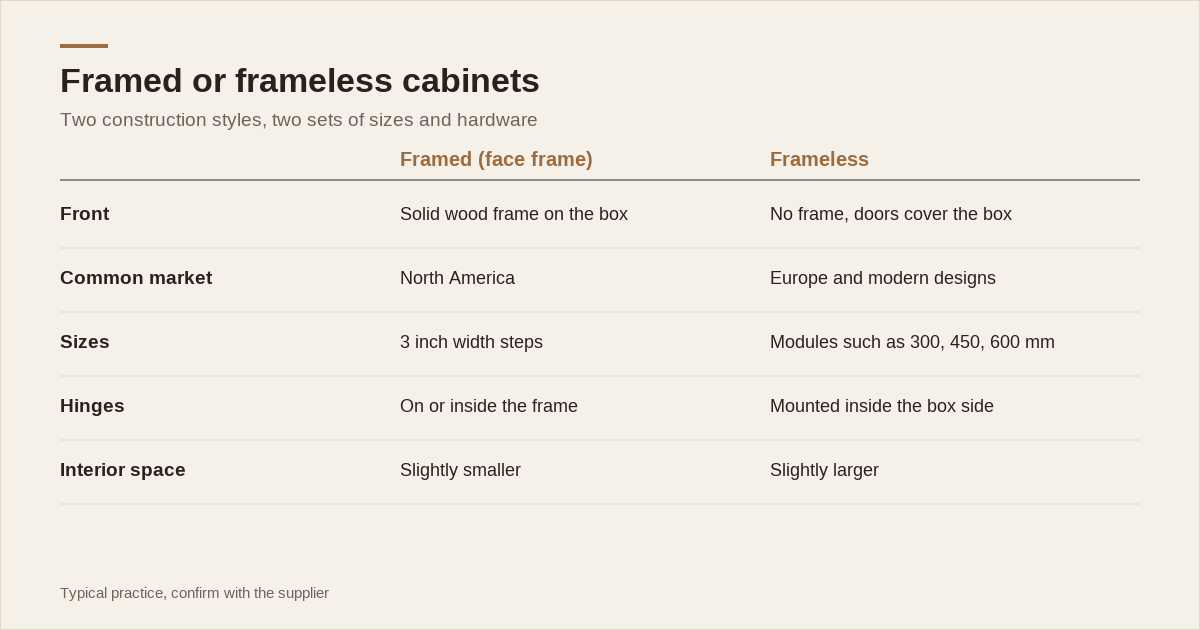
Framed (face frame). A solid wood frame covers the front of the box. Doors can sit full overlay, partial overlay or inset. This style is traditional in North America and uses standard sizes in 3 inch width steps, with base cabinets about 24 inches deep and 34.5 inches high and wall cabinets about 12 inches deep.
Frameless (full access). The box has no frame, and doors cover the box edges. Hinges mount inside the box side. This style is common in Europe and in modern designs, and it uses 32 mm hole spacing and module widths such as 300, 450, 600 and 800 mm.
A plant that makes both styles uses different drilling patterns and hardware. Say which style you need, and ask whether the plant has experience with your market’s sizes.
Box construction
The box carries the weight of countertops and contents and must stay square.
| Box material | Typical thickness | Strengths | Limits |
|---|---|---|---|
| Plywood | 12 to 18 mm | Strong, holds screws, handles moisture better | Higher cost, face quality varies |
| Particleboard | 15 to 18 mm | Low cost, stable, smooth | Swells when wet, weaker edge screw holding |
| MDF | 15 to 18 mm | Smooth, good for paint | Heavy, poor in damp |
| Solid wood | 15 to 20 mm | Premium look and feel | Moves with humidity, higher cost |
Plywood boxes are the choice for better quality and for humid markets. The panel guide in the plywood and MDF article explains how to read panel specifications. Box corners use dowels, cam fittings, dado joints or glued rabbets, and the back panel should be fitted into a groove or fixed to keep the box square.
Door styles
Doors set the look, and they are the most visible part of the cabinet.
Slab doors. A flat panel in veneered board, painted MDF, laminate or solid wood. Simple, modern and sensitive to flatness and edge quality.
Five piece or shaker doors. A frame of four rails and stiles around a recessed panel. The frame is solid wood or MDF, and the panel is plywood, MDF or solid wood in a groove. This style is common in North America. Joints at the corners may be mitred, cope and stick or dowelled, and they must hold without cracking in the paint.
Raised panel doors. A panel with a profiled edge in a frame. Traditional and labour intensive.
Glass doors. A frame with a glass insert. Check the glass type and the retaining method.
Doors in solid wood must be built to allow for movement, and painted joints that crack along the line are a classic failure. Frames made from stable finger jointed stock reduce the problem, as explained in the panel guide. Painted doors depend on the finishing line, covered in the finishing guide.
Hinges, slides and hardware
Cabinet hardware decides how the kitchen feels in daily use. Hinges for most cabinets are concealed cup hinges, with soft close as an option. Drawer slides are ball bearing, full extension, with soft close as an option. Specify the brand or the specification, including load rating and cycle count, because hardware is the usual place for substitution.
Pulls, knobs, toe kicks, shelf pins and leg levellers complete the set. Hardware may be supplied by the plant or by the buyer, and the order should say which. The knock down guide explains how to control hardware substitution.
Performance standards
In North America, the cabinet industry uses a performance standard that tests shelves, doors, drawers and finish. Many builders and retailers ask for a certificate of compliance to it. Ask the plant whether its cabinets have been tested to the standard your customer names, and request the report on the actual construction. Finishes are tested for resistance to chemicals, heat and humidity.
Formaldehyde limits apply to panels used in cabinets. In the United States, composite wood rules apply to cabinets and their components, and suppliers must meet the certification requirements, as explained in the CARB and TSCA guide. In Europe and other markets, emission classes apply. Ask for panel certificates before production.
Duties and origin rules
Kitchen cabinets and vanities have been a trade policy target in the United States. Anti-dumping and countervailing duty orders on cabinets from China have been in place for several years, and further trade actions have covered other origins and products. Rules, rates and investigations change often, and a rate quoted six months ago may no longer apply.
Three practical steps keep you safe.
- Check the current duty. Ask a licensed customs broker for the duty on your product code from Vietnam on the date of shipment, including any additional tariffs.
- Check origin. Duty depends on where the product was made, not where it shipped from. Cabinets made from parts produced elsewhere and only assembled in Vietnam may be treated differently from cabinets made in Vietnam. Ask the plant where the panels, doors and hardware come from.
- Keep records. Customs authorities ask for production records, invoices and proof of origin. A plant that keeps clear records protects you.
Do not rely on a factory’s verbal statement that there is no duty. Duty is the importer’s responsibility, and a change after you place an order can wipe out the margin. The payment terms and Incoterms guide explains how terms split cost and risk between buyer and seller.
Need a quote for this product? Get matched with a Vietnam wood factory
Assembled or flat pack
Assembled cabinets ship in cartons that fill a container with air, and a 40 foot container may hold only a few hundred cabinets. Flat pack cabinets ship as panels and hardware and hold far more. The saving in freight often exceeds the extra labour of assembly, especially for sales into markets where installers are used to flat pack. Assembled cabinets suit programs where installation speed matters most.
Ask for cubic metres per cabinet for both options, and calculate the landed cost per installed cabinet, not per box. The packaging guide covers carton strength and drop tests, which matter for large cabinet cartons.
Finishes, colour and consistency
Kitchen doors are finished in paint, stain, lacquer or foil, and a kitchen shows every colour difference, because dozens of doors hang side by side. Painted finishes need smooth substrates, a sealer and enough coats to hide joints. Stained wood finishes need colour sorted boards, as discussed in the finishing guide.
Order doors and boxes from the same lot where the box interior is visible, and keep a signed colour reference for repeat orders. Kitchens often ship in several batches as a building project progresses, and a later batch must match the first. Ask the plant to store the recipe and a retained door for each colour.
Planning the kitchen: schedule, fillers and mistakes
A kitchen order is a set of many different cabinets, and one wrong size can stop an installation. Ask for a cabinet schedule with a code, size, door style, hinge side and quantity for each item, and check it against the drawing before production. Include fillers, end panels, crown and light rail, since missing trim is the most common reason for a delayed install.
Allow for field adjustments. Walls are rarely square, and installers trim fillers to fit. Ask for scribe allowances on end panels and fillers. For large projects, build and ship one sample kitchen first, have it installed in a test area and fix the problems before the full order.
Water, heat and kitchen conditions
A kitchen is the harshest room in a home for wood. Steam from a kettle, spills near the sink and heat from an oven all attack finishes and edges. Ask where moisture reaches the box: the sink base is the most exposed, and a plywood or sealed edge there is worth the cost. Door edges near a dishwasher or a range need a water resistant edge band and a finish that survives wiping with cleaning products.
Programs for hot, humid markets should also ask about moisture movement in solid wood doors, since a door that fits in dry winter can swell in a wet summer.
Lead time
Kitchen projects have long calendars: sample and drawing approval, panel and hardware purchase, production, finishing, packing and sea freight. A first order commonly takes several months from approval to arrival, and a repeat order is shorter. The lead time guide shows how the stages fit, and builders should plan cabinet arrival well before the install date.
Checks before shipment
- Measure box dimensions and diagonals to confirm squareness.
- Check door gaps and alignment on a test assembled run.
- Test hinges and slides for smooth movement and a full cycle count on a sample.
- Inspect finish for runs, dust, edge coverage and colour match across doors.
- Check carton labels against the cabinet schedule, since a mixed up carton ruins an install.
- Check panel certificates and compare them with the lot used.
The quality inspection guide explains how to set acceptance limits.
What to put in the specification
State the style (framed or frameless), the box material and thickness, the door style and material, the finish, the hardware brand or rating, the standard, the panel certificates, the packing method (assembled or flat) and the labelling scheme. Ask the plant for the origin of each major component.
To compare factories that make kitchen cabinets, send your specification through the RFQ page. The matching service finds up to three Vietnamese wood factories and replies within 24 business hours.
See also: bathroom vanities from Vietnam and US trade remedies on Vietnam wood products for the current duty position.
Frequently asked questions
Are kitchen cabinets from Vietnam subject to extra duties in the United States?
Kitchen cabinets and vanities have been the subject of several trade measures in the United States, including anti-dumping and countervailing duties on Chinese products and later tariff actions covering other origins. Rules and rates change often. Confirm the current duty, the origin rules and any investigation status with a licensed customs broker before you quote a landed price.
What is the difference between framed and frameless cabinets?
Framed cabinets, common in North America, have a face frame of solid wood on the front of the box, and doors sit on or inside it. Frameless cabinets, common in Europe, have no face frame, the doors cover the whole box and the interior space is slightly larger. The two styles use different hinges, sizes and manufacturing methods.
Should I buy assembled or flat pack cabinets?
Assembled cabinets arrive ready to install but fill far more container space, and freight can outweigh the saving in labour. Flat pack cabinets cost less to ship and ask for assembly, so they suit programs where installers or customers can handle it. Many exporters offer both. Compare cubic metres per cabinet and the total installed cost.
Need a quote for this product?
Send the specification. We match you with up to 3 Vietnamese wood factories and reply within 24 business hours.
Get matched with a Vietnam wood factory