Guides / Sourcing Guide
Office and Home Office Furniture Made in Vietnam
November 15, 2026
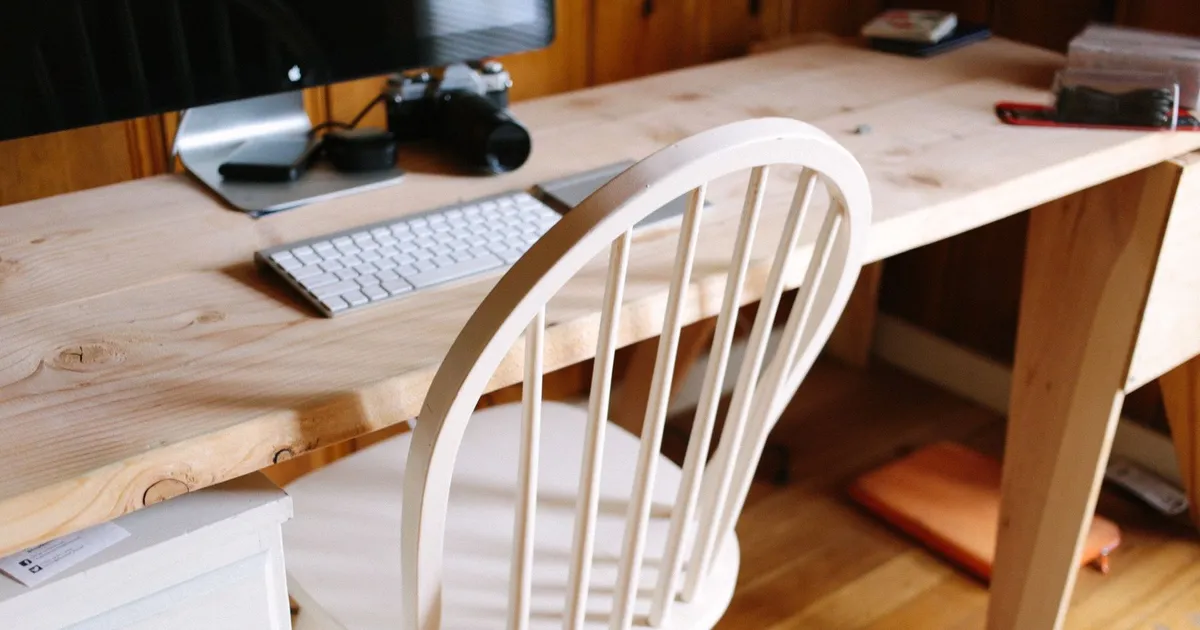
The home office changed what office furniture buyers want. Brands and retailers now sell desks, storage and chairs that look like home furniture and work like office furniture, while companies still buy desks, meeting tables, storage and reception pieces in volume. Vietnamese factories build all of these, mostly in wood, veneer, laminated panel and steel, and many plants already serve both home and contract buyers.
This guide covers the main product types, the construction and surface choices, the rules and tests to ask for and the checks that matter for a desk someone uses for eight hours a day.
Product types
| Product | Typical construction | What to watch |
|---|---|---|
| Fixed height desk | Wood or panel top, wood or steel legs | Stability, wobble, edge quality |
| Sit-stand desk | Panel or wood top on electric steel frame | Lifting mechanism, load, noise |
| Credenza and sideboard | Panel carcass with doors and drawers | Slides, hinges, tip-over rules |
| Bookcase and shelving | Panel or solid wood with fixed or adjustable shelves | Shelf deflection, wall anchoring |
| Filing cabinet | Panel or steel with drawer slides | Slide rating, locks |
| Meeting table | Large top on a base or legs | Flatness, joins, cable access |
| Reception desk | Veneered or laminated panel, custom shapes | Joins, finish, installation |
| Office and meeting chairs | Wood frame with upholstered seat, or metal frame | Strength tests, comfort |
Plants with strong wood furniture lines handle fixed desks, storage and meeting tables well. Sit-stand desks and ergonomic task chairs rely on bought in mechanisms, so ask who makes them and what tests exist.
Surfaces
Office furniture takes wear, so the surface choice matters.
Melamine or low pressure laminate. Paper impregnated with resin and pressed onto particleboard or MDF. Low cost, hard wearing and consistent in colour. Edges need ABS or PVC bands, as covered in the veneer and edge banding guide.
High pressure laminate (HPL). Thicker, harder and more resistant to scratches and heat. Costs more and is used on better desk tops and counters.
Veneer. Real wood on a panel core, warmer in look, and it needs a protective finish. Veneered desks suit executive and home office looks.
Solid wood and edge glued panel. Premium look, repairable and able to be sanded back. Needs good moisture control, and it moves, as explained in the panel guide.
Painted MDF. Smooth, flexible in colour and suited to modern designs. Edges are vulnerable and the finish needs a hard film.
Desk surfaces face coffee rings, hot laptop bases and abrasion from keyboards and paper. Ask for a finish test that matches use, such as resistance to a wet cup and to a hot object, and check how the surface behaves after several weeks of use in a test area.
Frames and mechanisms
Fixed desks use wood legs, steel legs or panel ends. Steel legs and T frames are stable and lighter. Panel ends cost less and need a strong connection to the top. Wood legs look good and need strong joints and brackets, as discussed in the knock down guide.
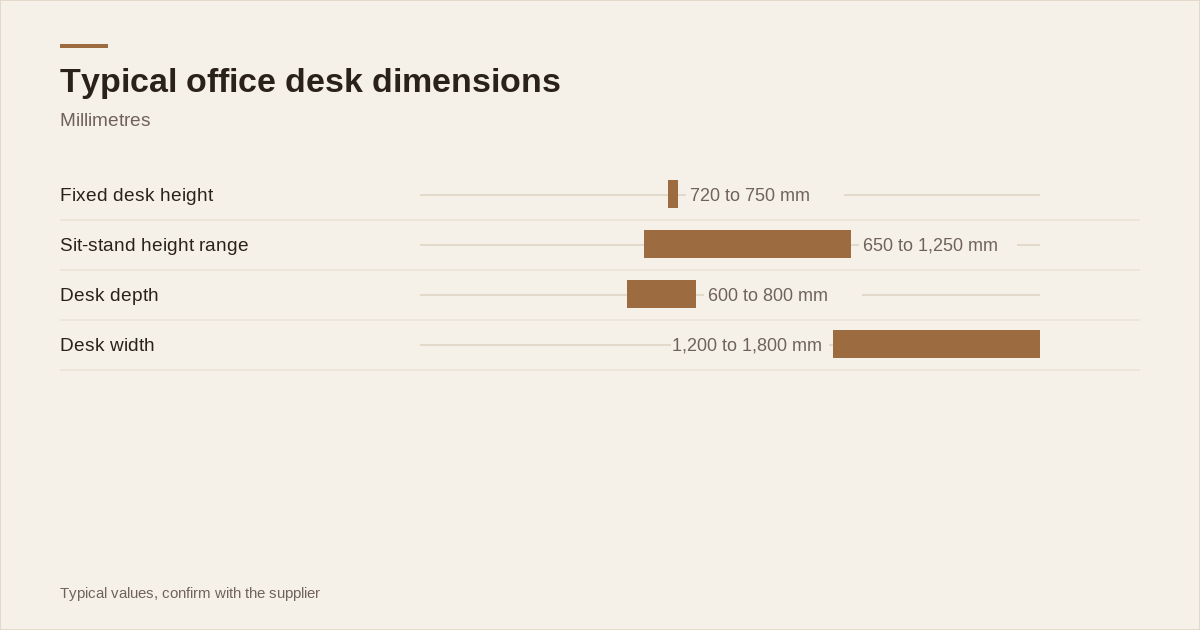
Sit-stand desks add three parts: lifting columns, a motor with a control box and a handset. The frame is steel with a powder coat finish. Specify the lift range, the load rating, the lifting speed and the noise level. Typical sit-stand mechanisms lift between about 650 and 1,250 mm and carry 80 to 125 kilograms, but products vary, so confirm figures on the data sheet. Ask for a cycle test report and a collision or anti pinch feature if your market asks for it.
Electrical parts bring their own rules. Motors, controllers and power supplies carry safety marks and test requirements in each market. Ask the plant to supply the certificates for the electrical parts, and check that the parts match the ones in the report.
Cable management
Desks live next to monitors, chargers and lamps, and cable management distinguishes a good desk from a plain table. Common features include grommets in the top, cable trays under the top, a rear modesty panel with a cable gap, power strips built in and cable clips on legs. Each feature adds cost and needs a clean cut in the panel with sealed edges.
Check the position of grommets and cutouts against the drawing, since a cutout in the wrong place cannot be fixed. Ask for sealed cut edges on laminate and veneer to avoid swelling.
Storage
Storage is the part of the office range that needs the most care. Drawers, doors and shelves carry load, and a full file drawer is heavy. Check slide ratings against the load, particularly for file drawers, and look at the carcass and the back panel. Locks are an option, and ask whether a keyed lock set and spare keys are included.
Tall units can tip. Rules on stability for storage units exist in several markets, and bookcases and credenzas may need a wall fixing kit and a test. Include wall anchors in the carton and a clear instruction. The bedroom furniture guide explains tip over rules for casegoods, and the same logic applies to tall office storage.
Standards and tests
Office furniture has its own test standards for strength, durability and stability, and several apply to desks, tables, storage and chairs. Corporate buyers often ask for compliance with named standards, and public tenders ask for documents. Ask the plant which standards the product has been tested to, and ask for the report on your product. If the standard your buyer names has not been run, test before you ship.
Low emission requirements are common in offices. Buyers ask for certificates for panels, coatings and adhesives, and for products that carry a recognised low emission mark. The panel and finish drive the result, so ask for certificates from the panel supplier and the coating supplier, and read the plywood and MDF guide and the CARB and TSCA guide. The furniture test standards guide shows how to read a test report.
Need a quote for this product? Get matched with a Vietnam wood factory
Seating for the office
Chairs deserve their own checks. A wood framed meeting or visitor chair follows the rules in the dining chair guide, with extra attention to seat comfort, since people sit for hours. Task chairs with gas lifts, tilt mechanisms and castors involve bought in parts and a separate test standard. Ask who supplies the gas lift and the base, what their ratings are and whether the chair has a report for the load and durability tests your market asks for.
Comfort is subjective, and a sample test is the only reliable check. Ask the plant for a sample and have several people of different sizes sit in it for a working day. Check seat depth, back support, arm height and the feel of the foam after a few hours. A chair that looks right in a photo may fail on the third hour.
Finishes that survive office life
Office furniture is cleaned often and with strong products. A finish that handles a wet cloth and a mild disinfectant wipe is worth specifying, and a test on the finished surface proves it. Laminates and HPL handle it well, and lacquered wood needs a hard film. Oil finishes need maintenance and suit home offices more than contract fit outs. The finishes guide lists the common systems.
Colour consistency matters when a company orders dozens of desks over several months. Ask the plant to keep a signed colour reference and to buy panel and laminate for a large order from one lot, since a later lot may differ slightly, and a mismatch across desks in one room looks careless.
Home office versus contract
Home office products are designed for lighter use and for appearance, and contract products are designed for heavier use, long service and bulk orders. The same desk can serve both markets if it passes the heavier test. Retail brands often start with a home product and discover that businesses want it, and the reverse happens as well.
Contract orders add requirements: delivery by floor and room, installation, spare parts, warranty and sometimes sample rooms. The hospitality and contract guide explains how project orders differ from retail orders, and the same ideas fit office fit outs.
Lead time and minimums
Office furniture follows normal furniture lead times, with extra time for bought in mechanisms and certificates. Sit-stand frames and chairs depend on supplier capacity. Ask the plant when mechanisms arrive and what the backup is. The lead time guide shows how to build a calendar, and the MOQ guide explains how to combine desks, storage and tables to reach a container.
Checks before shipment
- Measure desk height, depth, width and any cutouts against the drawing.
- Press and rock the desk on a flat floor to find wobble.
- Run the sit-stand mechanism through its full range several times and listen for noise.
- Check the load rating by placing a weight on a sample, within the safe limit.
- Inspect edges, corners and cable cutouts for chips and sealing.
- Check electrical parts and labels against the certificate.
- Open random cartons for hardware, instructions and labels.
The quality inspection guide explains how to set acceptance limits.
What to put in the specification
State the product dimensions and tolerance, the top material and thickness, the edge band, the frame and mechanism with brand or data sheet, the load rating, the cable features, the surface test, the standards and certificates required, the packing method and the instruction sheet.
To compare factories that make office furniture, send your specification through the RFQ page. The matching service finds up to three Vietnamese wood factories and replies within 24 business hours.
Frequently asked questions
What size should a standard office desk be?
A common fixed height desk is 720 to 750 mm high, 600 to 800 mm deep and 1,200 to 1,800 mm wide, with variations by market and use. Sit-stand desks cover a range of heights, often from about 650 to 1,250 mm. State the sizes, the height range and the load rating in the drawing, and approve them on a sample.
Can Vietnamese factories make electric sit-stand desks?
Many can make the top and the finish. The lifting columns, motors and controllers are often bought from specialist suppliers and fitted by the plant, and a few plants make the steel frames themselves. Ask which parts are bought in, who supplies them and what test reports exist for the lifting mechanism.
Do office desks need safety certificates?
Corporate buyers often ask for strength and stability tests under office furniture standards and for low emission certificates for panels and finishes. Home office buyers ask less, but the same product may be sold to both. Check the requirements of your customers and ask for test reports on the actual product.
Need a quote for this product?
Send the specification. We match you with up to 3 Vietnamese wood factories and reply within 24 business hours.
Get matched with a Vietnam wood factory