Guides / Sourcing Guide
Wooden Home Decor and Wall Art Made in Vietnam
November 21, 2026
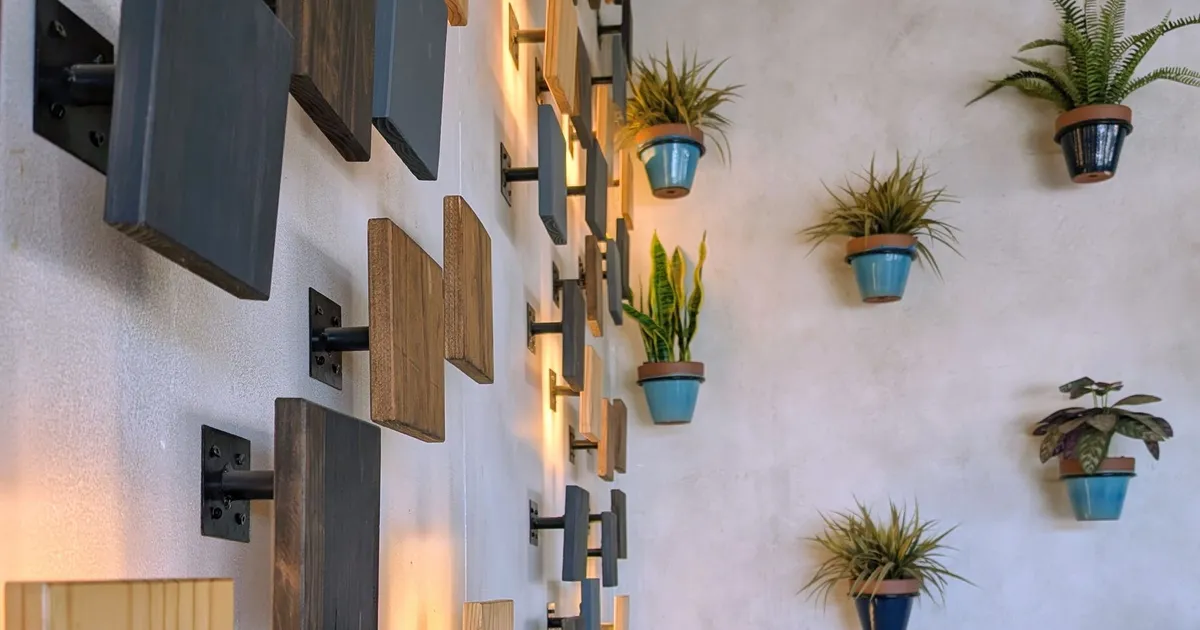
Wooden home decor is where Vietnamese craft skills show most clearly: carved wall panels, laser cut wall art, lacquered trays, turned bowls, mirror frames, wall shelves, storage boxes and mixed material accents with metal or woven fibre. Orders are smaller than furniture orders, designs change often and the finish is the product. That mix creates opportunities for brands and retailers, and it creates risks that are different from furniture risks.
This guide covers the main decor types, how they are made, the materials and finishes in use and the rules on food contact, species and safety.
Common decor types
| Type | How it is made | Typical materials |
|---|---|---|
| Carved wall panels | Hand carving or CNC routing | Solid wood, plywood, MDF |
| Laser cut wall art | Laser cutting and engraving | Plywood, thin MDF, veneer |
| Wall shelves and floating shelves | Panel cut and mounting hardware | Solid wood, veneered panel |
| Mirror and picture frames | Mitred frames, routed profiles | Solid wood, MDF |
| Trays, boards and bowls | Turning, routing, glue up | Solid wood, bamboo |
| Lacquerware | Layered coating and polishing | Wood or bamboo base |
| Inlay and marquetry | Hand cut pieces set into a base | Wood, shell, veneer |
| Mixed material accents | Wood combined with rattan, metal or ceramic | Various |
A single workshop rarely does all of them. Match the product to the technique: a laser cut specialist and a lacquer workshop have different skills and different equipment.
Techniques and what they cost
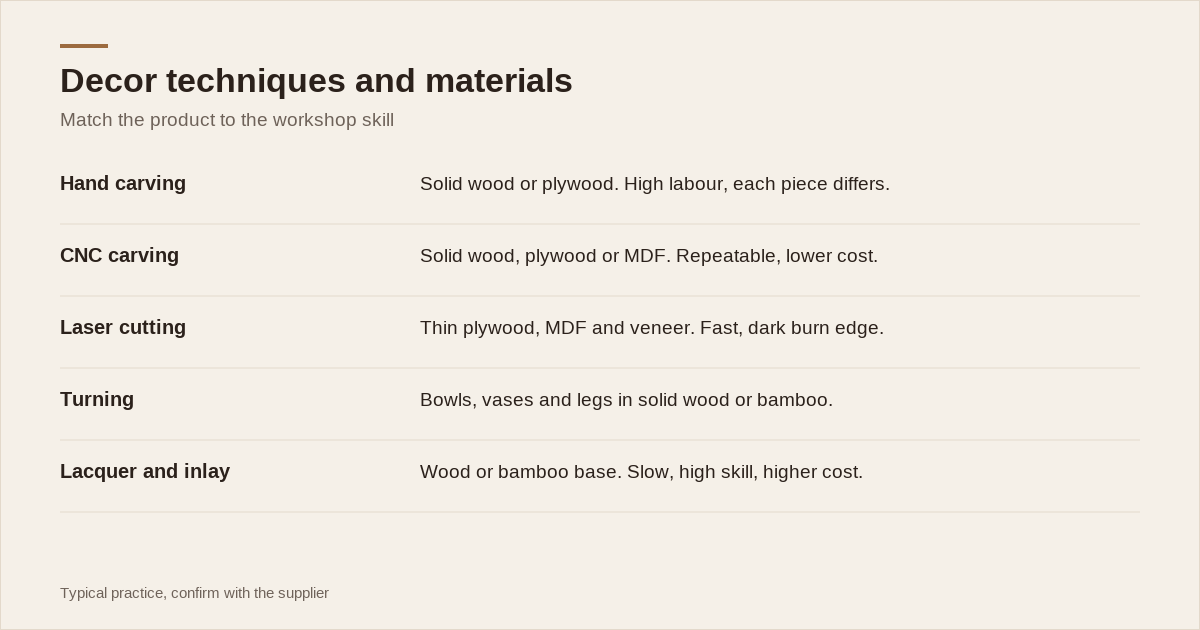
Hand carving. Skilled work with a high labour content. Each piece differs slightly, which is the point for some buyers and a problem for others. Cost depends on depth and detail.
CNC carving. A router reproduces a pattern accurately and quickly. Cost is lower and repeatability is high. Details may look machined, and hand finishing can add depth.
Laser cutting and engraving. Cuts thin material into intricate shapes and burns patterns on the surface. It is fast and precise, and the cut edges show a dark burn mark that some designs accept and others sand or paint. Plywood adhesive can affect cut quality.
Turning. A lathe shapes bowls, vases and legs. Quality depends on the wood drying and on the turner’s skill.
Lacquer. Layers of lacquer are applied and polished. Natural lacquer needs long drying under controlled humidity and can cause skin allergy before it cures, so plants handle it with care. Synthetic lacquers cure faster and cost less.
Inlay. Pieces of wood, shell or other material are cut and set into a base. The work is slow and costs more per square centimetre than most other techniques.
Ask the plant which technique it will use for your design and show a similar piece. A drawing without a technique leaves too much open.
Materials
Decor uses a wide set of materials.
Solid plantation woods such as rubberwood and acacia suit trays, shelves and frames. Plywood and thin MDF suit laser cut and large wall panels that must stay flat. Veneered panel gives a premium grain at moderate cost. Bamboo suits trays, boards and light frames. Imported hardwoods and teak suit premium pieces, as explained in the teak guide and the oak and ash guide. Rattan and woven fibres combine with wood in mixed material pieces, as covered in the rattan guide.
Thin parts warp. A wall panel 6 mm thick and 600 mm wide will bow if it is made from wet or unsuited material. Plywood is the stable choice for large flat decor, and frames and backing help hold the shape.
Finishes
Decor finishes include natural oil, wax, clear lacquer, stain, paint, lacquer with metal leaf and distressed or aged looks. The finish defines the look, so approve a finished sample under the same light as the final display.
Durability needs depend on use. A wall panel above a sofa sees little handling and tolerates a soft finish. A tray sees hands, liquids and heat, and needs a harder, more resistant finish. The finishes guide covers the common systems, and the spray booth guide explains how plants apply them.
Hand finishing makes pieces unique, and variation within a lot is normal. Set a tolerance and approve a sample that shows the range.
Food contact, children and chemical rules
Decor that touches food or children faces rules.
Food contact. Trays, boards, bowls and utensils must use materials and finishes that are safe for food. The European Union and the United States have rules on materials in contact with food, and buyers often ask for test reports and a declaration of compliance. Natural oils and certain waxes are common, while many decorative lacquers are not meant for food. State the intended use in the order.
Children’s products. Items intended for children, such as wooden toys and nursery decor, have strict limits on heavy metals, certain chemicals and small parts. Ask for reports from an accredited lab, as explained in the furniture test standards guide.
Paint and coating chemicals. Limits on lead and other substances apply in major markets. Ask the coating supplier for a data sheet and test the finished product.
Glue and panel. Plywood and MDF in decor need emission data, as covered in the CARB and TSCA guide.
Need a quote for this product? Get matched with a Vietnam wood factory
Species and legal risks
Some woods sold in decor carry trade controls. Many species of rosewood are listed in international trade conventions, and export and import need permits. Decor makers sometimes use the word rosewood loosely for a dark hardwood. Ask for the botanical name of every wood in the product, and check it against current trade lists. If the plant cannot name the species, choose another wood.
Legal origin matters for all decor in solid wood and plywood, as explained in the legality documents guide. Small workshops often buy wood from local traders, so the paper trail can be thin. Ask for supplier invoices and species declarations, and prefer plants that keep them.
Some destination countries check wooden items for bark, insects and soil at the border. Raw wood decor with bark or without treatment can be held. Ask your customs broker which documents and treatments your market expects.
Hanging and mounting wall pieces
A wall piece is only as good as its mounting. Heavy panels need a French cleat, a keyhole plate or metal brackets rated for the weight, and the instruction sheet must tell the customer which wall fixings suit which wall type. A decorative panel that comes off the wall in the night is a safety problem as well as a return.
Check three details. First, the hardware should be fixed to the panel with screws that bite into solid material, not into thin veneer or the edge of a laser cut plywood sheet. Second, the hanging points should be level and placed so the panel hangs straight, which means a jig at the plant. Third, the carton should carry the hardware in a labelled bag, with the right number of fixings for the weight. Ask the plant to test the mount with a load of at least twice the product weight, and photograph the test.
Moisture, warping and display conditions
Thin wooden decor reacts to humidity faster than thick furniture. A panel hung on an outside wall in a humid climate swells, and one hung over a heater dries and splits. Think about where the piece will hang and which climate the buyer sells into. The moisture content guide explains target ranges, and for decor the safest approach is a stable core, a sealed back and a finish on all faces so that moisture exchange is even.
A common failure is a panel finished only on the front. The unfinished back absorbs moisture and the panel bows toward the finished face. Ask the plant to seal the back and the edges, even when nobody will see them.
Design protection and copying
Decor is a design led product, and copying is common. If you commission a design, mark drawings, sign an agreement and keep records of what you sent. If the plant offers its own designs, ask who owns them and whether it sells the same design to others. Avoid asking a plant to copy a design you do not own. A copied item that crosses a border can be seized, and the buyer carries the risk.
MOQ, lead time and sampling
Decor orders run from a few hundred to a few thousand pieces per design. The setup for each design includes pattern making, jigs, laser files and colour samples, so small runs carry a premium. Combining several designs in one order by size or material can help the plant reach its minimum, as described in the MOQ guide.
Lead time is shorter than furniture for simple items and longer for lacquer and inlay. Sampling is fast for laser cut work and slower for hand carving and lacquer. Plan two sample rounds, using the routine in the sample guide.
Packing
Decor is fragile and often thin. Wall panels need rigid backing, edge protection and a carton that prevents flexing. Frames need corner guards. Mirrors need glass protection. Items that are glued and finished by hand scratch easily, so wrap each piece. The packaging guide covers carton strength and drop tests, and a pack test on one finished item is worth doing before the full order.
What to put in the specification
For each design, state the technique, the material and species with botanical name, the dimensions and tolerance, the finish with sample approval, the intended use (decor, food contact, children), the hanging hardware and its load rating, the tests required and the packing method.
To compare workshops and factories that make wooden decor, send your specification through the RFQ page. The matching service finds up to three Vietnamese wood factories and replies within 24 business hours.
Frequently asked questions
What is the minimum order for wooden decor in Vietnam?
Decor is made in smaller runs than furniture. Many workshops accept a few hundred pieces per design, and some accept less for simple items made from stock wood. Complex carving, inlay or lacquer work raises the minimum, because the setup and the hand time are the same for a small run as for a large one.
Is wooden decor safe for food contact?
Only if the wood, the finish and the glue are suitable. Trays, bowls and boards that touch food need food safe finishes and, in some markets, a declaration of compliance and test reports. A decorative lacquer that is fine for a wall panel may not be fine for a serving tray. State the intended use in the order.
Why should I avoid the word rosewood on a quote?
Many species sold as rosewood are listed under international trade rules that control export and import and need permits. A quote that names rosewood without a species and a permit invites a customs problem. Ask for the botanical name and the legal documents, or choose another species.
Need a quote for this product?
Send the specification. We match you with up to 3 Vietnamese wood factories and reply within 24 business hours.
Get matched with a Vietnam wood factory