Guides / Sourcing Guide
Wood Furniture Terms Explained: A Glossary for Buyers Quoting in Vietnam
November 21, 2026
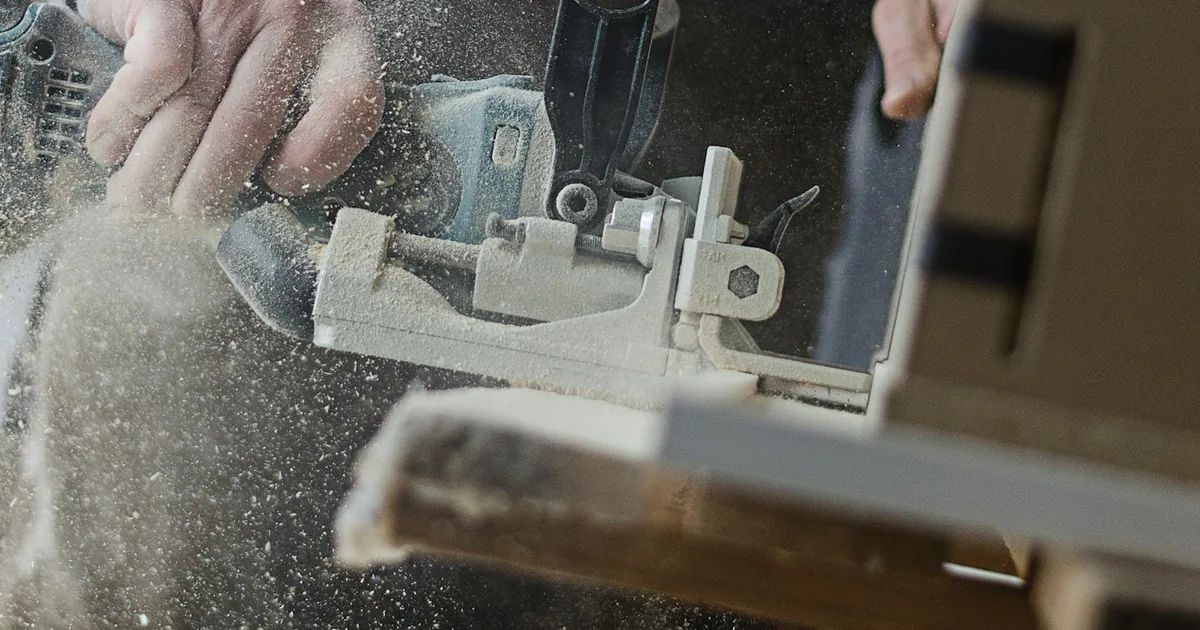
This glossary explains the terms that appear most often in quotes and emails from Vietnamese furniture factories, grouped under six themes with a closing section on using them in an RFQ. It is part of our guide to wood furniture manufacturers in Vietnam. One trap comes first: KD means knock-down in furniture and kiln-dried in timber, and factories use both. Write the full words in your specification and ask when an email says only KD.
Within each group the terms are alphabetical. A term with its own guide on this site links to it once.
Construction and joinery
Carcass. The box of a cabinet or case piece: sides, top, bottom and back, before doors, drawers and handles are added. Say how the carcass is built, for example plywood or particleboard, and how the corners are joined.
Cam fitting. A two-part connector for panels: a bolt in one panel and a rotating cam in the other pull the joint tight. It is common in knock-down furniture, where the customer assembles the piece and a wrong hole position stops the build.
Dowel. A short wooden pin glued into matching holes in two parts to align them and add strength. The holes must line up, which is why drilling accuracy and the machine used matter.
Jig. A fixture or template that holds or guides a part during machining or assembly. Each model needs its own jigs, and making them is one of the fixed costs behind the MOQ.
Knock-down (KD). Furniture shipped as separate parts with fittings, assembled by the buyer or end customer. It ships in far less volume than a built piece. See the knock-down design guide for hardware and tolerance.
Mortise and tenon. A frame joint in which a projecting tongue, the tenon, fits a rectangular hole, the mortise. It may be glued, pinned or wedged. It is a traditional joint for chair frames and table bases.
Show face. The surface that is visible in normal use. Mark it on your drawing, because the plant will give it the best grade of wood and the most careful finishing.
Tolerance. The permitted deviation from a stated dimension. Give a tolerance per critical dimension on the drawing, and remember that solid wood moves with humidity, so a very tight tolerance on solid wood is not realistic.
Wood and panel materials
Edge-glued panel (EGP). A wide panel made by gluing narrower strips of solid wood side by side. It is solid wood but is more stable than a single wide board. See the finger-jointed and laminated panels guide.
Finger joint (FJ). A joint made by cutting matching interlocking profiles into two pieces and gluing them, so short pieces become long ones. Finger-jointed wood uses offcuts efficiently, and the joints can show in the finished surface.
Grade. The quality class for knots, colour variation and defects. We found no single standard for terms such as clear and rustic, so agree the grade in writing with a reference sample.
Kiln-dried (KD). Timber dried in a heated chamber to a target moisture content. Ask for the target as a number, how it is measured and where the wood waits between the kiln and the machine. See our moisture content guide.
MDF. Medium-density fibreboard, made from wood fibre pressed with wax and a resin binder under heat and pressure. Because the resin binder can release formaldehyde, MDF is one of the panels covered by the US emission rule listed under paperwork below. See plywood and MDF for furniture.
Moisture content (MC). The weight of water in wood as a percentage of the weight of dry wood. State a target for the destination market, because wood that is too wet moves, cracks and grows mould after shipping.
Plywood. A panel of thin wood layers glued with the grain of each layer turned at right angles to the next, which makes it stable. It is the usual choice for stronger cabinet carcasses.
Solid wood. Sawn timber used as boards and parts, not reconstituted from fibre or particles. Its grain is real timber grain, and it moves with humidity. See solid wood versus engineered panel.
Veneer. A thin slice of wood glued to a board to give the look of solid timber on a stable base. Ask the species, the thickness and how the edges are finished.
Finish and appearance
Dry film thickness (DFT). The thickness of the cured coating, measured after drying. Ask for it instead of a coat count, because two plants can both say three coats and deliver very different films.
Edge banding. A strip applied to the exposed edges of a panel to cover the core. The material, thickness and adhesive decide how well the edge resists knocks and moisture. See veneer pressing and edge banding.
Finish systems (PU, water-based, UV-cured). Polyurethane is a solvent-based film that gives a hard clear coat on any shape. Water-based finishes are lower in solvent and slower to dry. UV-cured finishes harden in seconds under lamps and suit flat parts only. See wood finishes for export furniture and spray booth versus flat line.
Master sample. The approved sample that both sides sign and date, used as the reference for colour, finish and dimension. Photograph it and name it in the purchase contract.
Commercial terms
EXW (Ex Works). The buyer collects the goods at the factory and takes on the export steps. The US International Trade Administration lists it as a rule for any mode of transport.
FCA (Free Carrier). The seller hands the goods to a carrier named by the buyer at a named place. It is also listed as a rule for any mode of transport.
FOB (Free on Board). The seller delivers the goods on board the vessel at the named port. It is a sea and inland waterway rule only. A factory quoting FOB from a port far from its plant has trucking inside the price, so ask which port is meant.
Incoterms. The International Chamber of Commerce’s set of eleven three-letter trade terms. They allocate cost, risk and obligations between seller and buyer. Name the rule, the version and the place together, for example the rule, Incoterms 2020 and the port. See the payment terms and Incoterms guide.
Lead time. The time from a defined start, such as deposit and approved sample, to goods ready at the port. A quote should say which start it counts from. See the lead time guide.
MOQ. Minimum order quantity, usually per model and per finish. It follows from costs paid once per order. See MOQ and order economics.
OEM and ODM. OEM means the factory builds your design. ODM means you buy a design the factory already owns, sometimes with your finish and logo. The split decides who owns drawings and jigs. See OEM versus ODM.
Tooling charge. A one-off payment for jigs, moulds and fixtures made for your model. A charge you pay is tooling you own only if the contract says so.
Need a quote for this product? Get matched with a Vietnam wood factory
Paperwork and compliance
Regulatory entries below were checked on 19 October 2026 and are not legal advice. Confirm scope and dates with your customs broker.
Chain of custody (CoC). The FSC system that tracks forest-based material from forest to finished product. FSC says retailers that do not manufacture usually need no certificate of their own. We hold no FSC certificate, because certificates belong to factories. See FSC-certified wood from Vietnam.
EUDR. Regulation (EU) 2023/1115 on deforestation-free products. The European Commission’s page names furniture as an example of a covered derived product and gives 30 December 2026 for large and medium operators and 30 June 2027 for micro and small operators (30 December 2026 for those already covered by the EU Timber Regulation), as checked on 19 October 2026. See the EUDR guide.
HS code. The Harmonized System code that classifies a product for customs. The World Customs Organization maintains the six-digit level, used by more than 200 countries and economies. Your broker sets the code for your product and market.
Lacey Act. A US law. Under 16 U.S.C. 3372 it is unlawful to import a plant taken in violation of certain foreign laws, and an import declaration must give the scientific name, value, quantity and country of harvest for covered products. See wood legality documents.
TSCA Title VI. The US EPA rule on formaldehyde emissions from hardwood plywood, MDF, particleboard and finished goods containing them. See CARB and TSCA Title VI compliance.
Packing, inspection and shipping
AQL. Acceptance quality limit: the number of defective items tolerated in a random sample drawn during inspection. Agree the sampling plan and the limits for major and minor defects before the inspection, not after.
Carton drop test. A test that drops a packed carton from a stated height onto a defined surface to check that it protects the piece. Put the height and the pass rule in the packing specification. See export furniture packaging.
CBM. Cubic metres of cargo, calculated as length times width times height in metres. Freight and container planning use it, so ask for CBM per carton and per piece.
ISPM 15. The international standard for wood packaging material such as crates and pallets. Heat treatment means a minimum of 56 degrees Celsius for 30 continuous minutes throughout the wood including its core, and the packaging carries a mark with a treatment code such as HT. Wood packaging made wholly of processed wood material such as plywood or particleboard is exempt. It governs the packaging, not the furniture.
Pre-shipment inspection. An inspection by you or a third party when most of the order is packed and before the container closes. See quality inspection and container loading and, for the tests behind the limits, furniture test standards.
How to use these terms in an RFQ
Write terms in full the first time and name the standard or rule with its version. Instead of “KD, FOB, MOQ 100”, write: knock-down, Incoterms 2020 FOB at the named port, MOQ per model and per finish. Name the construction per component, the grade and the moisture target, the finish system with a master sample and the packing method with the drop test height. Ask each factory to reply in the same terms so that the quotes can be compared line by line.
For the full process of finding and comparing plants, return to our guide to wood furniture manufacturers in Vietnam. When your specification is ready, send it through the RFQ page. We reply within 24 business hours and match you with up to 3 Vietnamese wood factories that quote you directly.
Sources
- US International Trade Administration: Know Your Incoterms
- FSC: Chain of custody certification
- European Commission: Regulation on deforestation-free products
- Cornell Law School LII: 16 U.S.C. 3372, Lacey Act prohibited acts and import declaration
- US EPA: Formaldehyde emission standards for composite wood products
- World Customs Organization: What is the Harmonized System
- IPPC: ISPM 15, Regulation of wood packaging material in international trade (2018 revision)
- ICC: Incoterms 2020 rules
Frequently asked questions
What does KD mean in furniture?
KD has two common meanings. In furniture it means knock-down: parts shipped separately and assembled by the customer. In timber it means kiln-dried: wood dried in a chamber to a target moisture content. A factory email may use either, so ask which one is meant and write the full words in your specification.
What is the difference between FOB and EXW?
Under EXW the buyer collects the goods at the factory and takes on the export steps, and the rule can be used for any mode of transport. Under FOB the seller delivers the goods on board the vessel at the named port, and the rule is for sea and inland waterway transport only.
What is MOQ in furniture sourcing?
MOQ means minimum order quantity: the smallest order a factory will accept, often per model and per finish. It reflects costs paid once per order, such as setup, sampling, material buying and line changeover. Reducing the number of variants usually lowers it more than negotiating the quantity itself.
Is MDF the same as plywood?
No. Plywood is made of thin layers of wood veneer glued with the grain turned at right angles. MDF is made of wood fibre pressed with wax and a resin binder. They behave differently under screws, moisture and paint, so name the one you want.
Need a quote for this product?
Send the specification. We match you with up to 3 Vietnamese wood factories and reply within 24 business hours.
Get matched with a Vietnam wood factory